Monday, August 18, 2008

A Woman's Secret (1949)


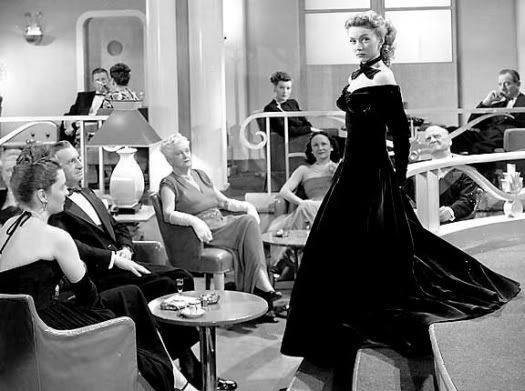
"A Woman’s Secret (1949), Nicholas Ray’s second film, is arguably one of the most maligned and ignored films of his career. While the criticisms seem well deserved (it is clearly one of the director’s weaker movies), the lack of any thorough, sustained criticism on the film is certainly not so deserved. Even enthusiasts of the director’s career, it seems, either circumvent the topic or write it off a failed contract-job in which Ray had little interest—thus justifying their own dismissive evaluations... What stands out in the finished film—and what aligns it with Ray’s characteristic interest in both marginalized, countercultural characters and tension-wrought relationships—is the interaction between Gloria Grahame and Maureen O’Hara. What could have been played as a strict ingénue/director binary becomes a complex power struggle, at once male/female and mother/daughter, which overflows with sexual and adolescent undercurrents..."

Read my full essay on Nicholas Ray's A Woman's Secret online here at Not Coming to a Theater Near You.

http://www.notcoming.com/reviews/awomanssecret/

Monday, August 11, 2008

The Devil Inside: Filming Jim Thompson’s first-person pulp psychosis


Mark Ash and I co-wrote an essay on the cinematic adaptations of Jim Thompson recently for Moving Image Source. It is called "The Devil Inside: Filming Jim Thompson’s first-person pulp psychosis."

"In Jim Thompson’s America, men are born killers—they don’t have killing thrust upon them. The major forebears of Thompson’s pulp fiction, written primarily for the paperback market beginning in the 1940s and continuing until the early 1970s, were the small-town narratives of James M. Cain. But in Cain, everymen are turned into murderers by circumstance, for the sake of money or a girl; Thompson’s innovation was to turn circumstance into a psychological state. It’s not the lure of temptation or the crush of necessity that drives his protagonists to crime, but the perception of its requirement, for self-preservation or out of moral obligation."

Read the full essay here at Moving Image Soruce.

http://www.movingimagesource.us/articles/the-devil-inside-20080811

Friday, August 08, 2008

Elegy (2008)


"Evoking the deep, rich hues of Velazquez and Goya, director Isabel Coixet brings a baroque elegance to her compositions — coming close to conveying Roth’s own virtuoso display of language, if inevitably falling short. Coixet and screenwriter Nicholas Mayer thankfully make no significant compromises with Roth’s novella: no Terms of Endearment here, Elegy finds no sentimental closure to Kepesh’s mortality or his lingering insatiability for a physical existence."

Read my full review of Elegy here at The L Magazine.

http://thelmagazine.com/6/22/Film/feature4.cfm?ctype=2

Monday, July 28, 2008

"Max Linder and the Death of Bourgeois Respectability"


“Laughter is a new kind of weapon. A type of light gun, very effective in cases where there is no need to employ heavy tanks of social wrath,” wrote Sergei Eisenstein in 1937, describing his ideal vision of Socialist Comedy as a new genre. Just over thirty years earlier in France, as cinema was nearing the decade mark and Georges Méliès was exploring the fantastic and the macabre as had never seen before, Max Linder was aiming his revolutionary camera-as-gun at the bourgeoisie and their sacred rituals. He tore down pretension and ridiculed respectability. The very symbols of social refinement – clothing, manners, marriage, propriety – are the targets for his humor. The greatest victim, however, is always Linder himself...

Read my full essay on Max Linder online here at Not Coming to a Theater Near You.

http://notcoming.com/features/maxlinder/

Friday, July 25, 2008

Satantango (1994)

"Surpassing the high-standards set by the Criterion Collection and Masters of Cinema, Facets’ long-awaited release of Bela Tarr’s Satantango (1994) is a shoe-in for one of the best DVDs of the year. Meticulously restored, the film’s deep, oceanic black-and-white images retain all of Tarr’s signature hypnotic beauty...Unfolding over the film’s seven and a half trance-inducing hours, Tarr’s extended long takes (many lasting several minutes) invoke an almost out-of-body experience in the viewer, as real-time blends with Tarr-time and the minutes on-screen encapsulate something both intimately specific and profoundly universal. Time has rarely been used more wisely in cinema..."

Ready my full review of Satantango online here at The L Magazine.


http://www.thelmagazine.com/lmag_blog/blog/post__07240806.cfm

Back to Normandy (Retour en Normandie) (2007)

"Embedded in these modest memories is the crux of Philibert’s film: the idea that cinema can act as a personal, or even communal, history, and that the images don’t just tell the narrative as written in the script, but also act as a visual record of the real people involved in the production. It’s an example of narrative cinema functioning as a home movie. Philibert waits until the final moment of the film to reveal his true motivation for making the film: his own father, recently deceased, had a small role in the film that was eventually cut."

Read my full review of Nicolas Philibert's Back to Normandy (Retour en Normandie) online here at Not Coming to a Theater Near You.

http://notcoming.com/reviews/backtonormandy/

Thursday, July 24, 2008

I, Pierre Rivière, Having Slaughtered My Mother, My Sister, and My Brother… (1976) and Back to Normandy (2007)

"Fusing anthropology and noir with a neo-realist aesthetic, René Allio’s cinematic adaptation of Michel Foucault’s I, Pierre Rivière, Having Slaughtered My Mother, My Sister, and My Brother… (1976) is as bleak and severe as its title suggests. Using local farmers and their families as actors, Allio shot the film on location, not far from the small French village where the original murder occurred in 1835... Blisteringly realistic and disturbingly acute in its exploration of familial betrayal and social ethics, the film is rarely screened and not available on video in the US. Its obscurity unjust, I, Pierre… is deserving of wider attention and re-evaluation..."

"Playing alongside I, Pierre… is Back to Normandy (2007), the new documentary by Nicolas Philibert (To Be and To Have [2002]), who was Allio’s assistant on the former film. An imaginative and innovative departure from the typical 'behind the scenes' documentary, the film isn’t merely interested in chronicling the production history of I, Pierre… but instead is captivated by the real-life personalities of the villagers who acted in the film..."

Read my full review of I, Pierre Rivière, Having Slaughtered My Mother, My Sister, and My Brother… and Back to Normandy online here at The L Magazine.

http://thelmagazine.com/lmag_blog/blog/post__07230806.cfm

Friday, July 18, 2008

Mary Ellen Bute Retrospective at Anthology Film Archives

Using popular pieces of classical music as a foundation, such as Copland’s “Hoedown” and Saint-Saëns’ “Danse Macabre,” Mary Ellen Bute and her alternating cast of collaborators (among them Norman McLaren and her husband Ted Nemeth) created an unprecedented cinematic sensation: an animated synthesis of music and abstracted impulses that pulsed and gyrated in organic ecstasy. There is such unbridled joy in her films — as though the images themselves were an elastic and ever-expanding dance — as well as an irresistible sense of humor...

Read my full essay on Mary Ellen Bute online here at The L Magazine.

http://www.thelmagazine.com/lmag_blog/blog/post__07170809.cfm

Wednesday, July 09, 2008

La France (2007)

"France has given us two of the most charmingly original films of the year so far, both of them fond, modernist interpretations of the musical genre. First was Christophe Honore’s tale of young love in the city, Love Songs, and now Serge Bozon’s WWI battlefield fable, La France."

Read my full review of La France here at The L Magazine.

http://thelmagazine.com/6/19/Film/feature4.cfm?ctype=2

Thursday, July 03, 2008

New Video! "My Mouth" by Modern Silent Cinema


Here's a new video for the song "My Mouth" by Modern Silent Cinema, from the album "Gets Hiccupy." Email if you want a copy of the album.

www.myspace.com/modernsilentcinema

Thursday, June 12, 2008

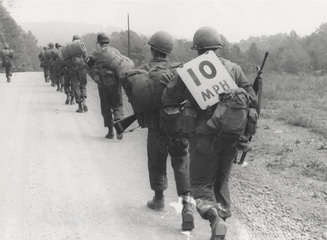
Frederick Wiseman's "Manoeuvre" (1979)

"If Basic Training documented an overly confident army (as characterized by one officer’s declaration, 'The United States Army has never lost a war,'), then Manoeuvre is documenting the aftermath of such brashness. Under Wiseman’s characteristic impartial direction, uncertainty and insecurity mar the illusion of an institution that typically presents itself as invulnerable, thus offering an unusually nuanced portrait of an institution all too often stereotyped as one-dimensional."

Read my full review of Frederick Wiseman's Manoeuvre online here at Not Coming to a Theater Near You.

http://notcoming.com/reviews/manoeuvre/

Wednesday, June 11, 2008

Monsieur Verdoux (1947)

"A murderous attack on bourgeois conventionality, Charlie Chaplin’s Monsieur Verdoux represents the apex of the artist’s subversive humor. Chaplin’s films have always been anti-establishment, favoring marginal characters cast aside by society and left to fend for themselves."

Read my full review of Monsieur Verdoux here at The L Magazine.

http://thelmagazine.com/6/16/Film/feature4.cfm?ctype=2

Sunday, June 08, 2008

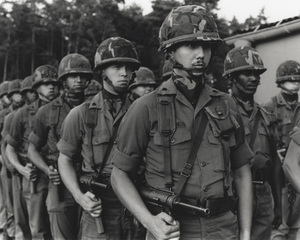
Frederick Wiseman's "Basic Training" (1971)

"Even without the presence of a subjective voice-over narration, it’s difficult not to read the repeated shots of hand-to-hand combat with stuffed dummies in light of the ultimate goal of training: to fight in Vietnam. Wiseman’s insight isn’t at all an irony, but rather an incongruity between the controlled circumstances during training and the actual circumstances in which they will have to utilize their lessons."

Read my full review of Frederick Wiseman's Basic Training online here at Not Coming to a Theater Near You.

http://notcoming.com/reviews/basictraining/

Wednesday, May 28, 2008

New Song! New EP! Modern Silent Cinema!

Just posted a new song called "Than Burning" on MySpace from my upcoming EP, "Gets Hiccupy." The artwork (featured here) is by Mat Hinkel of Mat Design. I think he did a pretty awesome job. Check out his page and give him some applause! Anyway, check out the song, leave some comments, let me know if you want a copy of the album.

www.myspace.com/modernsilentcinema for more info.

Wednesday, May 14, 2008

Little Fugitive (1953)

"Little Fugitive delicately blends documentary realism and candid-camera style photography with a sparse, unobtrusive narrative, the combination of which recalls equally the light touch of early cinema actualities and 1940s Italian Neorealism. Engel’s background with the Photo League, as well as Orkin’s newsreel training during WWII, give the film’s portrait of New York City, and particularly Coney Island, a staggering, nostalgia-inducing authenticity."

Read my full review of Little Fugitive online here at The L Magazine.

http://thelmagazine.com/6/13/Film/feature3.cfm?ctype=2

Sunday, May 04, 2008

Idiots and Angels (2008) Tribeca Film Festival Preview

"The lovingly sullen atmosphere of the film never falls into misanthropy, partially because Plympton (and his audiences) find too much joy in laughing at the characters’ ornery behavior and the bizarre way the situations resolve themselves. The detour may be long and nightmarish, but at the end of Plympton’s journey there is redemption and hope, however—as Penelope Huston said of the endings of Preston Sturges’ films—always with a Cheshire cat’s grin."

Read my full review of Bill Plympton's Idiots and Angels online here at The L Magazine.

http://www.thelmagazine.com/lmag_blog/blog/post__05010804.cfm

Thursday, May 01, 2008

Sita Sings the Blues (2008) Tribeca Film Festival Preview

As if to emphasize Sita’s relevancy for modern viewers, Paley interweaves into the narrative a contemporary story of a young woman whose boyfriend moves to India for work (just as Rama left to go hunting). Only instead of waiting behind, this woman packs her bags and moves to India of her own will. The ensuing domestic discontent becomes a counter-point to the original story, and offers a potential answer to the question of, “What does an ancient story like Sita’s have to do with today’s world?” Paley’s charming response confirms that the past can have quite a bit to say about the present.

Read my full review of Sita Sings the Blues online here at The L Magazine.

http://www.thelmagazine.com/lmag_blog/blog/post__04300806.cfm

Wednesday, April 30, 2008

Modern Silent Cinema - "For Every Mave (There's Some Poor Sap)"


New video for Modern Silent Cinema's "For Every Mave (There's Some Poor Sap)" from the new album "The Curtain Lecture." More info at www.myspace.com/modernsilentcinema

Tuesday, April 29, 2008

Katyn (2007) Tribeca Film Festival Preview

The real highlight of Katyn is Krzysztof Penderecki’s magnificent score...which often works its discordant melodies just beneath the surface of the film, subtly affecting the mood and quietly amplifying the overall sense of horror. For all its embracing of dissonance, there is something unexpectedly reticent and shy about Penderecki’s score, which makes it all the more commendable and effective.

Read my full review of Andrzej Wajda's Katyn online here at The L Magazine.

http://thelmagazine.com/lmag_blog/blog/post__04280809.cfm

Monday, April 28, 2008

The Caller (2008) Tribeca Film Festival Preview

'The Caller thinks that by virtue of leaving certain plot elements and character motivations unexplained that it will become “mysterious." Instead, the film becomes a lame exercise in sub-par genre clichés, devoid of any sense of intrigue or suspense in either its story or characters.'

Read my full review of The Caller online here at The L Magazine.

http://thelmagazine.com/lmag_blog/blog/post__04240818.cfm

A President to Remember (2008) Tribeca Film Festival Preview

"A President to Remember seems to be the type of documentary that Primary was providing an antidote for. This new film is comprised largely of Kennedy’s telecast speeches, as well as footage from Drew’s four previous Kennedy films, strung together with narration from Alec Baldwin that negates any of the controversies and contentions about Kennedy’s presidency, reducing him to almost picture-book simplicity."

Read my full review of Robert Drew's A President to Remember online here at The L Magazine.

http://thelmagazine.com/lmag_blog/blog/post__04240817.cfm

My Winnipeg (2007) Tribeca Film Festival Preview

'Maddin’s narration (performed by Darcy Fehr, who previously performed as “Guy Maddin” in Maddin’s Cowards Bend the Knee) carries echoes of David Goodis’ noir lamentations, and while he speaks cynically about his hometown and its citizens, referring to them as “sleepwalkers,” he never forgets how closely linked to them he is (reinforced by the constant reminder to “stay awake” less he forget to get off the train and wake up back home in Winnipeg).'

Read my full review of Guy Maddin's My Winnipeg online here at The L Magazine.

http://www.thelmagazine.com/lmag_blog/blog/post__04240813.cfm

Wednesday, April 23, 2008

Roman de Gare (2007)

On the way to her engagement party, a woman is dumped by her fiancé at a gas station. A mysterious man (who may or may not be either a serial killer or a bestseller’s ghostwriter) offers her a ride back to her parents’ house, and she asks him to pretend to be her fiancé for one night. Roman de Gare is undeniably cunning with a deft mix of mystery and romance (a Lelouch specialty), though the ending is ultimately more clever than satisfying.

Read my full review of Claude Lelouch's Roman de Gare online here at The L Magazine.

http://www.thelmagazine.com/6/11/Film/feature7.cfm?ctype=2

Tuesday, April 22, 2008

Toby Dammit (1968) Tribeca Film Festival Preview

"Toby Dammit appears in a new 35mm print whose restoration was overseen by its cinematographer Giuseppe Rotunno. With its wide palette of vibrant hues that enhance the film’s delirious and seemingly never-ending tracking shots of leering faces and popping flashbulbs, the film has now been restored to its original hallucinatory glory."

Read my full review of Toby Dammit online here at The L Magazine.

http://www.thelmagazine.com/lmag_blog/blog/post__04220801.cfm

Monday, April 21, 2008

Confessionsofa Ex-Doofus-ItchyFooted Mutha (2008) Tribeca Film Festival Preview

"While at first the film’s amateur DV photography and iMovie-ish editing effects seem charmingly crude, there’s an extraordinary and admirable punk rock quality to them, as though van Peebles were giving the middle finger to every existing standard editing procedure. The editing is crucial to the film’s overarching iconoclasm and DIY-extreme aesthetic, and its technical limitations only seem to instigate even more innovations (the inserting of children sledding and a crowded-beach-shot-ala-Weegee into a sex montage is both breathtaking and scene-stealing)."

Read my full review of Melvin van Peebles' Confessionsofa Ex-Doofus-ItchyFooted Mutha here at The L Magazine.

http://www.thelmagazine.com/lmag_blog/blog/post__04210802.cfm

Wednesday, April 16, 2008

Alberto Cavalcanti and Henry Wulschleger's "Captain Fracasse" (1929)

"What’s shocking about the conclusion of Captain Fracasse is its unbridled sobriety: coming after a fanciful series of swordfights in which no one actually dies, the stark reality of a single death is chilling...So much of Captain Fracasse can be written off as a fairy tale, which is why this execution scene is so powerful, because it is a moment when the fantastic façade of the fiction falls away to reveal a gritty reality: that actions have consequences, and while the rich are allowed to live a fairy tale existence, those less privileged do not always retain the authorship of their own destinies..."

Read my full review of Alberto Cavalcanti and Henry Wulschleger's Captain Fracasse online here at Not Coming to a Theater Near You.

http://notcoming.com/reviews/captainfracasse/

Silent Ozu (Eclipse Box Set)

'And in I Was Born, But…, the highlight of the set (and for my money, a masterpiece to surpass Tokyo Story), two young brothers, while trying to gain the respect of the neighborhood gang, struggle to understand why their father isn’t “important” in the grand scheme of things. The profound simplicity of the children’s disobedience (“Just because he spanked me doesn’t make him important”) and parents’ concern (“Will they lead the same sorry lives we have?”) are characteristic of Ozu’s sensibility, a universal blend of quotidian comedy and transcendental tragedy.'

Read my full review of the Silent Ozu Eclipse DVD Box Set online here at The L Magazine.

http://thelmagazine.com/6/10/Film/feature5.cfm?ctype=2

Wednesday, April 09, 2008

Street Kings (2008)

The utter lack of character insight and depth could be interpreted as a weakness, but at the same time Street King’s bulldozer-like approach keeps it moving at a swift pace, something lacking in so many recent films. Its “surface-only” aesthetic also seems completely deliberate on the part of writer James Ellroy, whose career is steeped equally in contemporary cop lore and the urban mythology of post-WWII Hollywood (L.A. Confidential and The Black Dahlia). Essentially, the film feels like a pulpy late-40s noir made on the cheap...

Read my full review Street Kings online here at The L Magazine.

http://thelmagazine.com/6/9/Film/feature4.cfm?ctype=2

Wednesday, March 26, 2008

Water Lilies (Naissance des pieuvres) (2007)

Written and directed by first-time filmmaker Céline Sciamma, Water Lilies feels remarkably assured in its handling of emotion and desire, never resorting to overly emphatic trauma or snarky anti-emotionalism... [The film] lingers on its characters’ hesitations and empathizes with the overbearing sense of risk and self-doubt so symptomatic of adolescence.

Read my full review of Water Lilies online here at The L Magazine.

http://thelmagazine.com/6/8/Film/feature6.cfm?ctype=2

New Directors New Films 2008

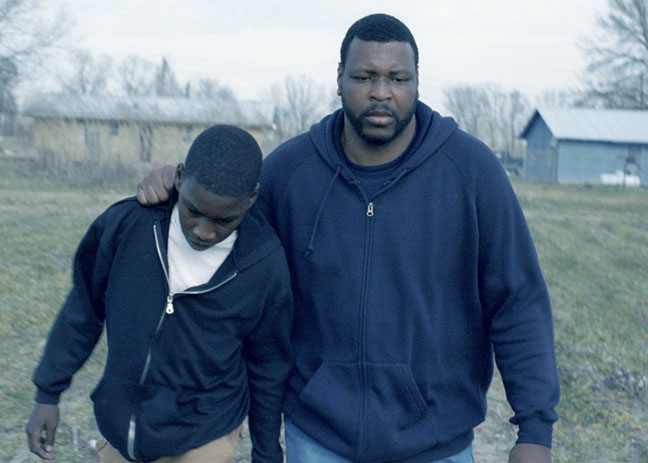
Ballast (Lance Hammer, 2007) 96 min. Gorgeously filmed on 35mm using only natural lighting, Ballast recalls Nestor Almendros’ photography for Claire’s Knee and Days of Heaven transplanted to the Mississippi Delta. Its story, of how a mother and son cope with their estranged father’s suicide, is seductively bleak.

More capsule reviews on this year's New Directors New Films series online here at The L Magazine.

http://thelmagazine.com/6/8/Film/feature9.cfm?ctype=2

Boarding Gate (2007)

"Olivier Assayas’ Boarding Gate, a corporate-corruption-neo-noir, could be imagined as Michael Clayton with a sexy, drug smuggling femme fatale in the lead role. But that would be overly emphasizing the corporate context of the story – an aspect that even the protagonist, Sandra, doesn’t fully comprehend at the film’s end – and denying the visceral desolation and emotional malaise that lies at the film’s core."

Read my full review of Olivier Assayas' Boarding Gate online here at Not Coming To a Theater Near You.

http://notcoming.com/reviews/boardinggate/

Wednesday, March 12, 2008

Le Grand Franju

"Georges Franju opens his 1958 short La Première Nuit with an epigraph that could easily preface any of his other films with equal insight and justification: 'It only requires a little imagination for the most ordinary action to become imbued with disquieting meaning, for the décor of everyday life to engender a fantastic world.' The division between reality and fantasy is not so much highlighted as blurred: Franju imbues the fantastic with a quotidian casualness and uncovers the dormant nightmares in our everyday life."

Read my full review of Anthology Film Archives' George Franju retrospective online here at The L Magazine.

http://thelmagazine.com/6/6/Film/feature2.cfm?ctype=2

Thursday, February 28, 2008

"Nostalgia, then Clobber"


New video for an album that won't come out until summer, probably. Maybe sooner, if I get things together. It's all done and everything, just that there are 2 other albums done that I finished first. The song is called "Nostalgia, then Clobber," and the album is "A History of Parrots." Hope you enjoy. www.myspace.com/modernsilentcinema for more info.

Inventing the Underground (On the Legacy of Amos Vogel)

"Amos Vogel is arguably the person most responsible for contemporary New York City film culture. Before Anthology Film Archives, Film Forum, the IFC Center or Two Boots were around to introduce audiences to the latest in independent, foreign, documentary or experimental cinema — before there was even much of an inkling such films existed — there was Vogel’s Cinema 16, a film society that introduced audiences to a whole new way of looking at not only movies but also the world around them."

Read my full article on Amos Vogel online here at The L Magazine.

http://thelmagazine.com/6/5/Film/feature10.cfm?ctype=2

Monday, February 25, 2008

Baby Face Harrington (1935)

"What makes Baby Face Harrington stand out is not its clever satirizing of gangster movies, nor its status as a mid-period film of director Raoul Walsh, nor its cast that reads like a 'Who’s Who' list of underappreciated character actors, but that its very premise is about the elevation of these 'character actors' to star status: the foregrounding of what is normally merely background ephemera."

Read my full review of Baby Face Harrington online here at Not Coming To a Theater Near You.

http://notcoming.com/reviews/babyfaceharrington/

Sunday, February 24, 2008

Marcel Duchamp's "Anemic Cinema"


Here's a new score I/Modern Silent Cinema composed and performed for Marcel Duchamp's 1926 avant-garde classic "Anemic Cinema." More info on the band at www.myspace.com/modernsilentcinema.

Wednesday, February 20, 2008

Modern Silent Cinema - "Gertie on Tour"


For those of you who don't know, I also compose and perform music under the name Modern Silent Cinema (www.myspace.com/modernsilentcinema). I recently began scoring short films and decided to post one of them on YouTube. The film is "Gertie on Tour" (1921) by Windsor McCay. Check it out and hope you enjoy.

Tuesday, February 19, 2008

The Signal (2007)

"The Signal is an apocalyptic amalgamation of several far better films — Renoir’s The Rules of the Game, Romero’s Dawn of the Dead and especially Buñuel’s The Discreet Charm of the Bourgeoisie — each of which already investigates the same major theme of The Signal: the breakdown of our existing social order."

Read my full review of The Signal here at The L Magazine online.

http://thelmagazine.com/6/4/Film/feature7.cfm?ctype=2

Wednesday, January 30, 2008

More on "The Silence Before Bach" (2007)

"Pere Portabella’s The Silence Before Bach is one of the most exciting and unprecedented musical films in recent years and conveys more understanding of music than a dozen Walk the Lines could ever hope to."

Read my full review of The Silence Before Bach here at The L Magazine online.

http://thelmagazine.com/6/3/Film/feature5.cfm?ctype=2

Don't Look Back (1967)

'From its indelible opening scene, in which a neo-statuesque Dylan stands in an alley holding up cue cards with words from “Subterranean Homesick Blues” while the song plays over the soundtrack, Pennebaker’s cinema verite-styled film challenges traditional music documentaries... [The] fractured relationship between “the artist” and society is Pennebaker’s central theme: accessible enough to make the film appeal even to non-Dylan fans, yet crucial enough to make the film resonate loudly forty-one years later.'

Read my full review of Don't Look Back here at The L Magazine online.

http://thelmagazine.com/6/3/Film/feature8.cfm?ctype=2

Friday, January 25, 2008

The Silence Before Bach (Die Stille vor Bach) (2007)

"Perhaps only the person seated at the piano is privy to such an intimate look at the dance of the piano keys, and perhaps even he isn’t allowed as bare and stripped-down an examination as Portabella has filmed. Creating exciting, new contexts for Bach’s work is at the heart of The Silence Before Bach: not so much reinvigorating the music, but placing it in unfamiliar territory so as to emphasize its deep and varied nuances."

Read my entire review of The Silence Before Bach online here at Not Coming Soon To a Theater Near You.

http://notcoming.com/reviews/thesilencebeforebach/

Thursday, January 17, 2008

Midwinter's Night Dream (2004)

"Serbian director Goran Paskaljevic prefaced a screening of Midwinter Night’s Dream by saying that it is “perhaps my only film without humor.” A modest statement, if also accurate considering its dismal subject of post-war, post-Milosevic Serbia, but so much of Paskaljevic’s humor comes from his humanism, something Midwinter Night’s Dream is severely not lacking in."

Read my entire review of Midwinter Night's Dream online here at Not Coming Soon To a Theater Near You.

http://notcoming.com/reviews/midwinternightsdream/

Friday, January 04, 2008

Best of 2007

Note: Originally I had ten movies in numerical order. Then, after realizing I had left Waitress off the list, I decided to make it number eleven and, in not wanting to go back and re-think the order, just alphabetize them.

Theatrical Releases

Billy the Kid (Venditti)
The Diving Bell and the Butterfly (Schnabel)
Flanders (Dumont)
I Don’t Want to Sleep Alone (Tsai)
Offside (Panahi)
Romance of Astrea and Celadon (Rohmer)
Shotgun Stories (Nicholas)
Summer '04 (Krohmer)
Syndromes and a Century (Weerasethakul)
There Will Be Blood (Anderson)
Waitress (Shelly)


Repertory Picks
1. Killer of Sheep (Burnett, 1977, IFC)
2. The Tender Enemy (Ophüls, 1936, BAM)
3. Let’s Get Lost (Weber, 1988, Film Forum)
4. Reveille With Beverly (Barton, 1943, Film Forum)
5. Bad Santa (Director’s Cut) (Zwigoff, 2003, IFC)

Thursday, January 03, 2008

Looking for Otto Preminger

If there’s anything to be learned from Preminger’s movies, it is that nothing is as it seems: from his early tour de force Laura (1944) to the late masterpiece Bunny Lake is Missing (1965), Preminger’s films are preoccupied with illusory truths and shifting façades. The premises of both these films — a murdered woman in the former and a missing child in the latter— are shattered midway through, challenging everything the audience has learned up to that point.

Read my entire review of Film Forum's Otto Preminger retrospective here at The L Magazine online.

http://thelmagazine.com/6/1/Film/feature1.cfm?ctype=2

Thursday, December 20, 2007

Honeydripper (2007)

"If all you know John Sayles from is the incredible Lone Star (1996), you might not be prepared for Honeydripper, which seems destined for high-school history classrooms."

Read my entire review of Honeydripper online here at The L Magazine.

http://thelmagazine.com/5/29/Film/feature8.cfm?ctype=2

Wednesday, November 21, 2007

The Cinema of Max Ophuls

It’s a source of daily frustration that the films of Max Ophuls are not more widely available, and BAM’s extensive retrospective comes like a long-awaited oasis of rare and incomparable cinema. At the moment, only Lola Montes (1955), Ophuls’ final film and only one in color, is available on DVD. The film is the perfect culmination of a career dedicated to illicit affairs and turbulent passions; tortured women caught between their desires and society’s strict mores; and a swirling, mobile camera that expresses life’s fatalistic merry-go-round unlike anyone else’s before or since.

Read my full review of The Cinema of Max Ophuls here at The L Magazine online.

http://thelmagazine.com/5/27/Film/feature3.cfm?ctype=2

Wednesday, November 07, 2007

Audience of One; Shotgun Stories; The Killer Within

With echoes of Faulkner, Shotgun Stories tells the story of a deep-seated feud between two different families — familes that shared the same father and who were raised to despise one another. After the father dies, both families’ sons become progressively vengeful and violent. Produced by David Gordon Green (George Washington), this is the debut of writer/director Jeff Nichols. He expresses the same poetic sensibility of his producer, yet distinguishes himself with an almost Viscontian sense of epic tragedy.

A father and professor of psychology at a local university, Bob Bechtel’s secret is that in 1955, he committed one of the earliest school shootings in America while at Swarthmore University: He killed one fellow student before turning himself in. Macky Alston’s perceptive direction does its best to break Bechtel’s seemingly impenetrable mask, which makes The Killer Within all the more compelling and unforgettable.


“In 1994, at age 40, Pastor Richard Gozowsky saw his first movie.” This title card provides the genesis for Michael Jacobs’ fascinating, infuriating and uncomfortably funny documentary Audience of One. Within one year, Gozowsky received a message from God — “I want you to be the Rolls Royce of filmmaking” — and began production on Gravity: The Shadow of Joseph, a biblical sci-fi epic described as “Star Wars meets The Ten Commandments.”

Read reviews of Michael Jacobs' Audience of One, Jeff Nichols' Shotgun Stories, and Macky Alston's The Killer Within here at The L Magazine online.

http://thelmagazine.com/5/26/feature/feature2.cfm?ctype=1

War/Dance (2007)

Husband-and-wife co-directors Sean Fine and Andrea Nix Fine artfully interweave politics, personal stories and performance, and all three areas of the film seem in perfect harmony as they inform and inspire one another. The competition story is neither too uplifting nor too detached from the film’s political consciousness: even the most optimistic moments are tinged with a perseverance that reflects a troubled past and an uncertain future.

Read my full review of War/Dance here at The L Magazine online.

http://thelmagazine.com/5/26/Film/feature6.cfm?ctype=2

Wednesday, October 10, 2007

"Terror's Advocate" (2007)

"One can see a predilection for fringe characters throughout Schroeder’s career: More, with 1960s counterculture; General Idi Amin Dada, about the infamous Ugandan dictator; and Barfly, based on the writings of skid row’s poet laureate Charles Bukowski. Schroeder doesn’t necessarily align himself with his subjects, nor does he exploit or malign them. Instead, he is fascinated by the performance and construction of extreme individualism."

Read my full review of Terror's Advocate here at The L Magazine online.

http://www.thelmagazine.com/5/24/Film/feature6.cfm?ctype=2

Tuesday, October 09, 2007

"Finishing the Game" (2007)

"But racial politics seem to have got the better of Lin in Finishing the Game, as he spends so much time mocking cultural stereotypes that his characters rarely get the chance to move beyond them into any nuanced performances. Though reminiscent of Christopher Guest’s films (and the fake Dirk Diggler documentary featured in Boogie Nights), Finishing the Game lacks Guest’s subtle eccentricity, as well as his ability to render idiosyncratic characters with simultaneous strangeness and familiarity."

Read my entire review of Finishing the Game here at The L Magazine online.

http://www.thelmagazine.com/5/23/Film/feature7.cfm?ctype=2