With Virgin Megastore closing in the upcoming weeks, Netflix fast running local video stores out of business, the rise of streaming media online, the continued hubbub about piracy, and the still-uncertain introduction of Blu Ray discs, the fate of the DVD is certainly questionable. Nor is VHS as "obsolete" as many would think: many films are still unavailable on a digital format, and with the industry in such a state of flux, the once assured market for obscure films on home video is no longer a guarantee. That doesn't stop stores from practically giving away VHS tapes of otherwise impossible-to-find movies like King Vidor's (1920), which I found for $3 at I-won't-say-where and have never seen on eBay or Amazon (or in any other stores). In the midst of all this, two of Hollywood's oldest surviving studios, MGM and Warner Bros., are continuing to roll out old movies from their vaults in restored editions on DVD, but both are using drastically different means that belie the uncertainty of the home video market....
Read the full piece at The L Magazine.
Tuesday, May 12, 2009

Monday, May 11, 2009
Tod Browning at Film Forum

A teen runaway turned circus barker and vaudevillian, Tod Browning's sideshow life on the fringes of society foreshadowed the outcasts that would become the epicenter of his films. Whether theatrical performers themselves (such as in The Unknown and Freaks) or criminals who use theatricality as part of their schemes (The Blackbird and The Devil Doll), Browning's characters are linked by a shared anguish which manifests itself physically. It is only fitting that Browning learned filmmaking under the guidance of D.W. Griffith, for whom he was an actor. Whereas Griffith's innovative close-ups of Lillian Gish's face to reflect her pure soul, Browning used Lon Chaney's entire body to convey the impurity of his. And for five consecutive Mondays beginning May 11th, sin and lust will rule the big screen as Film Forum celebrates macabre master Browning...
Read my full essay on Tod Browning here at The L Magazine.
Tuesday, May 05, 2009
A Grin Without a Cat (1977)

One could view Chris Marker’s A Grin Without a Cat (1977), just released on DVD by Icarus Films Home Video, as an aggressive antidote to such dumbed-down fairytales of that tumultuous time period, but that would hardly scratch the surface of the film’s profundity. In this three-hour tome to two decades of political struggle around the globe, Marker charts the idealistic rise of the international leftist movement in the 1960s and its problematic fracturing in the subsequent decade. Using his characteristic essay-film format, Marker culls interviews and footage from disparate sources, including propaganda and activist films, and weaves them into a complex tapestry of perpetually diverging political viewpoints...
Wednesday, April 29, 2009
Alain Resnais: A Decade in Film

KimStim and Kino are shedding much needed (and highly desired) light on the career of French auteur Alain Resnais by making a quartet of his 1980s movies available on home video for the first time. Known primarily for a pair of arthouse classics, Hiroshima, Mon Amour (1959) and Last Year at Marienbad (1961), and the short concentration camp documentary Night and Fog (1954), Resnais’s filmography is spread out over the course of 70+ years — and the octogenarian auteur’s latest film is set to premier at this year’s Cannes Film Festival. But while most of us have to wait for Les herbes folles until it screens over here (a New York Film Festival hopeful?), in the meantime we have these four 80s flicks to remind us of his singularly poetic sensibility.
Read my full review of Alain Resnais: A Deacde in Film here at The L Magazine.
Leon Morin, Priest (1961)

Jean-Pierre Melville’s name evokes images of fedoras and lengthy trench coats billowing like church robes. In appropriating iconic symbols of American gangster films, Melville created his own world, in which hardboiled mythologies meshed with the philosophical concerns of post-World War II France. But after several films in this mold, such as Bob le Flambeur and Deux Hommes dans Manhattan, Melville wanted a change. Film historian Tom Milne writes: “In a spirit of contradiction, it seems, since the Nouvelle Vague was by then at flood tide, he announced with his sixth film [Léon Morin, Priest] in 1961, that he was tired of being the darling of a handful of cineastes.”
Read my full review of Leon Morin, Priest here at The L Magazine.
Thursday, April 23, 2009
"The Films of Shirley Clarke: Rebel With a Cause"

“There’s a dissatisfaction with merely going to the movies,” proclaims Shirley Clarke in Noël Burch and Andre S. Labarthe’s documentary Rome Burns: A Portrait of Shirley Clarke (1970). Throughout, she is never without two things: a cigarette between her lips, and a sincere humility. Seated on the floor of a Parisian apartment with friends and colleagues (including Jacques Rivette and Yoko Ono), the New York-native Clarke opens up about her revolutionary ideas about cinema, as well as her own misgivings about her earlier works. The three features she had shot at that point—The Connection (1962), The Cool World (1964), and Portrait of Jason (1967)—wrenched burgeoning cinema verite trends in new, groundbreaking directions. But for every liberating frame that passed through her camera, Clarke saw more work that needed to be done. To her, the then-current relationship between the audience and the movie was antiquated: “I don’t want them separated by the screen anymore.” In fusing experimental, documentary, and narrative film techniques, Clarke was a significant force in creating “modern” cinema in the 1960s.
Read my full essay on Shirley Clarke here at Hammer to Nail.
http://www.hammertonail.com/genre/documentary/films-of-shirley-clarke-at-anthology/
Wednesday, March 25, 2009
2009 New Directors/New Films

"The standout of this year’s [New Directors/New Films] fest is So Yong Kim’s Treeless Mountain (pictured), the highly anticipated follow-up to Kim’s debut feature In Between Days, a Sundance and Berlin award winner from 2006. When a mother leaves her two daughters with their aunt in Seoul in order to finalize a divorce, she also leaves them with a piggy bank. When it is full, she tells them, she will return. And so they wait, grilling grasshoppers to sell to local youths, and counting their change. Kim saturates her film with the pregnant stasis of childhood, and her young actors, Hee Yeon Kim and Song Hee Kim, express more depth than any of this year’s leading or supporting Oscar noms."
Read my full coverage of the 2009 New Directors/New Films series here at The L Magazine.
Tuesday, March 17, 2009
Eclipse Series 15: Travels with Hiroshi Shimizu

"Our understanding of pre-World War II Japanese cinema has been limited not merely to those few films in distribution, but to those even in existence. Between unstable nitrate stocks (used for early films), poor preservation and earthquakes —not to mention World War II — most of those films are irrevocably lost to history. Contemporary American audiences’ conceptions, in particular, are formed almost exclusively by Yasujiro Ozu’s playful formalism and Kenji Mizoguchi’s tragic heroines. All of which makes Eclipse Series 15: Travels with Hiroshi Shimizu not only an exciting, long-overdue release, but also a historically redefining moment. For the first time, American audiences will have access to one of the foundational artists of Japanese cinema, whose prolific output between 1924 and 1959 (166 films) well exceeds the combined filmographies of Ozu and Mizoguchi."
Red my full review of Eclipse Series 15: Travels with Hiroshi Shimizu here at The L Magazine.
Monday, March 02, 2009
The Iron Mask (1929)

Douglas Fairbanks was the king of Hollywood in the silent era. Off-screen, he defined the dapper gentleman that was to be expected of Hollywood stars: his wife and queen was “America’s Sweetheart” Mary Pickford, and their castle was Pickfair, a palace where all of cinema’s royalty gathered. On-screen, though, he was something else all together—he was the embodiment of all the magic that the movies promised to provide.
Read my full review of The Iron Mask here at Not Coming to a Theater Near You.
http://www.notcoming.com/reviews/ironmask/
Thursday, February 26, 2009
The Wedding March (1928)
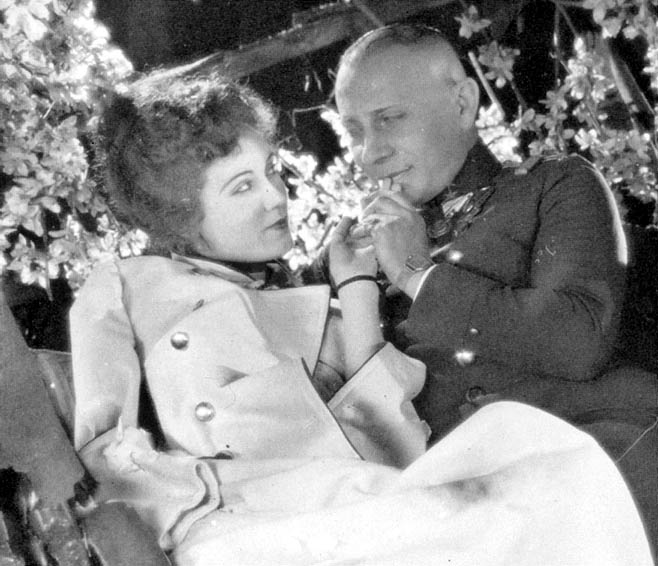
The Wedding March is, like its “creator,” uncompromising. Full of cruelty and perversion, this is not the vision of the world that the Hollywood of the 1920s projected. (Ironically, it certainly was the preferred off-screen lifestyle of the Hollywood of the 1920s.) Naivety is an alien concept, and innocence long since abandoned. And the token “happy ending”? Nowhere to be found. If this doesn’t sound like the Hollywood that you’re used to seeing, then Erich von Stroheim achieved his goal.
Read my full review of The Wedding March here at Not Coming to a Theater Near You.
http://www.notcoming.com/reviews/theweddingmarch/
Saturday, February 21, 2009
Street Angel (1928)

“Everywhere… in every town, in every street… we pass, unknowing, human souls made great by love and adversity.” Street Angel is not just the story of a gutter waif (Janet Gaynor) and an itinerant painter (Charles Farrell) who fall in love and must persevere against all the obstacles the world throws at them. Instead, Borzage elevates them to the level of gods. The streets they walk are not those of Naples, but of a mythological space akin to Mount Olympus. Everything, and everybody, is the absolute embodiment of an ideal: life is hardship, love is divine, fate is always against us, and people are either saints or devils. Or, as the title suggests, angels—fallen from the heavens, and left to battle here on earth.
Read my full review of Street Angel here at Not Coming to a Theater Near You.
http://www.notcoming.com/reviews/streetangel/
Thursday, February 19, 2009
"Must Read After My Death" (2008)

Everything is different in hindsight. Time heals certain wounds, while others fester and deepen with the passing days. Memories go in and out of focus. Problems either work themselves out, or else new dilemmas arise and take precedent, the old ones fading into the past. When the end is in sight, things just don’t look as bad as they once did. Perspective allows us to see things more clearly. And this is precisely what is missing in Morgan Dews’ piercing documentary Must Read After My Death, and also what makes the film so singular, so touching and traumatic to watch.
Read my full review of Must Read After My Death here at Hammer to Nail.
http://www.hammertonail.com/genre/documentary/must-read-after-my-death-this-american-life/
Lonesome (1928)

The addition of “talking” sequences are not the only sign that the silent age was almost over. In one scene, a character listens to a record alone in their room. Next door, someone else listens intently to the song. Sound traverses space to briefly unite them. Even though they are separate, they share in the experience together. Without the aid of a soundtrack, such a bond can only be intimated and not actualized. Lonesome was released twice—first as the silent picture it was intended to be, and later with a synchronized soundtrack with music, sound effects, and the few dialogue scenes. Fejos fully realizes the potential of the silent screen—but I think he also hints (perhaps unintentionally) at the future possibilities to come with the arrival of sound.
Read my full review of Paul Fejos' Lonesome here at Not Coming To a Theater Near You.
http://www.notcoming.com/reviews/lonesome/
Sunday, February 08, 2009
The Silence After Sound: Hollywood's Last Silent Movies

"The switchover from silent to sound in the American film industry, which began in late 1927, was primarily complete by 1929 — all of which begs to ask, what happened on American screens in 1928? It was a pivotal year in the transition, an entire year in which silent and sound pictures shared theater marquees, and when both were viable commercial artforms. Though silents would still exist in 1929, their era was not just numbered – it was practically over."
Read my full essay "The Silence After Sound: Hollywood's Last Silent Movies" online here at Not Coming to a Theater Near You.
http://notcoming.com/features/silenceaftersound/
Saturday, January 31, 2009
The Honeymoon Killers (1969)

"The Honeymoon Killers (1969) is more Cain than even James Cain himself. Martha Beck and Ray Fernandez, the film’s central lovers/killers, could easily take the place of any of Cain’s partners-in-crime. They’re just as cold-blooded and ruthless as duplicitous wife Phyllis Nirdlinger and insurance agent Walter Huff in Double Indemnity, and just as hot-blooded and passionate as vagabond Frank Chambers and restless waitress Cora Papadakis in The Postman Always Rings Twice. Yet unlike them, Martha and Raymond didn’t come from any author’s imagination—they came straight from the newspaper headlines of 1949."
Read my full review of Leonard Kastle's The Honeymoon Killers here at Hammer to Nail.
http://www.hammertonail.com/genre/drama/honeymoon-killers-the-noir-verite/
Thursday, January 22, 2009
Stahl vs. Sirk at Anthology Film Archives

"John M. Stahl and Douglas Sirk were fated to share a double bill. The passing decades have made it clear that these two icons of melodrama don’t merely reflect their respective time periods, but actively comment upon them. Moreover, as contract directors at Universal, both were fortuitously given the same material to adapt — which not only eagerly invites comparison, but also highlights their singularity as artists."
Read my full coverage of Anthology Film Archives' series Imitations of Life: Stahl vs. Sirk online here at The L Magazine.
http://thelmagazine.com/7/2/Film/feature9.cfm?ctype=2
Tuesday, January 13, 2009
ROSSELLINI’S HISTORY FILMS - The Change and Growth of An Independent Master
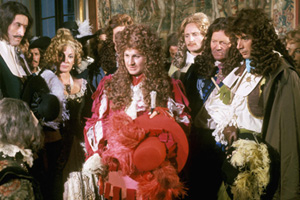
"But there’s also a larger debt that has gone unpaid for far too long, which is that Rossellini embodied a far more important concept of an 'independent filmmaker' that went beyond topics and aesthetics. He resisted labels and refused to be tied down to a single style. Yet the farther he moved away from the particularities of his earlier work, the more the world rejected Rossellini. He made a certain kind of movie, and that’s what they expected and, more importantly, understood. Such is the dilemma all artists face when they grow and change."
Read my full review of The Taking of Power by Louis XIV (1966) (Criterion Collection) and Eclipse Series 14: Rossellini’s History Films—Renaissance and Enlightenment online here at Hammer to Nail.
http://www.hammertonail.com/?p=551
Saturday, January 10, 2009
In Memoriam: Donald Westlake

"On New Year’s Eve, Donald Westlake, alias Richard Stark, went to that big bank heist in the sky – the “one last score” you never return from. The 75-year-old Brooklyn-native and writer of more than 150 books (not to mention numerous short stories and screenplays) died of a heart attack while on vacation in Mexico. Born in 1933, Westlake was one of the last remnants of a bygone literary era. He may have attended several colleges, but he never graduated from any. And he certainly didn’t learn writing from any “creative writing” class. Instead, he threw himself into the thriving pulp paperback market and began churning out novels at a rate that would scare many contemporary writers into an early retirement..."
Read my full article on Donald Westlake online here at The L Magazine.
http://www.thelmagazine.com/lmag_blog/blog/post__01080906.cfm
Wednesday, December 24, 2008
Hoppity Goes To Town (1941)

"WALL-E isn’t the only dystopic animated feature to tackle humankind’s destruction of the planet. Forty-seven years before Pixar’s social critique, there was brothers Max and Dave Fleischer’s Hoppity Goes to Town (1941), a Capra-esque tale of a young, idealistic grasshopper, Hoppity, who must not only confront the scheming, lecherous C. Bagley Beetle, but also save his bug community from the ever-expanding populace of Manhattan."
Read my full review of Hoppity goes to Town here at The L Magazine.
http://thelmagazine.com/lmag_blog/blog/post__12220808.cfm
Bigger Than Life (1956)

"Nicholas Ray’s Bigger Than Life feels closer to a suburban monster movie than to any conventional melodrama from the period. Even James Mason, who plays the grade-school teacher secretly moonlighting as a cabbie, undergoes stark physical, psychological and emotional changes that seem an uncanny parallel to the sci-fi mutation films that proliferated during the era. But instead of Godzilla rising from the ashes of nuclear destruction, Ray gives us Mason, your prototypical 1950s white-collar dad, who is collapsing under the strains of meeting the status quo."
Read my full review of Bigger Than Life here at The L Magazine.
http://thelmagazine.com/6/36/Film/film16.cfm?ctype=2
Subscribe to:
Posts (Atom)