Monday, July 28, 2008

"Max Linder and the Death of Bourgeois Respectability"


“Laughter is a new kind of weapon. A type of light gun, very effective in cases where there is no need to employ heavy tanks of social wrath,” wrote Sergei Eisenstein in 1937, describing his ideal vision of Socialist Comedy as a new genre. Just over thirty years earlier in France, as cinema was nearing the decade mark and Georges Méliès was exploring the fantastic and the macabre as had never seen before, Max Linder was aiming his revolutionary camera-as-gun at the bourgeoisie and their sacred rituals. He tore down pretension and ridiculed respectability. The very symbols of social refinement – clothing, manners, marriage, propriety – are the targets for his humor. The greatest victim, however, is always Linder himself...

Read my full essay on Max Linder online here at Not Coming to a Theater Near You.

http://notcoming.com/features/maxlinder/

Friday, July 25, 2008

Satantango (1994)

"Surpassing the high-standards set by the Criterion Collection and Masters of Cinema, Facets’ long-awaited release of Bela Tarr’s Satantango (1994) is a shoe-in for one of the best DVDs of the year. Meticulously restored, the film’s deep, oceanic black-and-white images retain all of Tarr’s signature hypnotic beauty...Unfolding over the film’s seven and a half trance-inducing hours, Tarr’s extended long takes (many lasting several minutes) invoke an almost out-of-body experience in the viewer, as real-time blends with Tarr-time and the minutes on-screen encapsulate something both intimately specific and profoundly universal. Time has rarely been used more wisely in cinema..."

Ready my full review of Satantango online here at The L Magazine.


http://www.thelmagazine.com/lmag_blog/blog/post__07240806.cfm

Back to Normandy (Retour en Normandie) (2007)

"Embedded in these modest memories is the crux of Philibert’s film: the idea that cinema can act as a personal, or even communal, history, and that the images don’t just tell the narrative as written in the script, but also act as a visual record of the real people involved in the production. It’s an example of narrative cinema functioning as a home movie. Philibert waits until the final moment of the film to reveal his true motivation for making the film: his own father, recently deceased, had a small role in the film that was eventually cut."

Read my full review of Nicolas Philibert's Back to Normandy (Retour en Normandie) online here at Not Coming to a Theater Near You.

http://notcoming.com/reviews/backtonormandy/

Thursday, July 24, 2008

I, Pierre Rivière, Having Slaughtered My Mother, My Sister, and My Brother… (1976) and Back to Normandy (2007)

"Fusing anthropology and noir with a neo-realist aesthetic, René Allio’s cinematic adaptation of Michel Foucault’s I, Pierre Rivière, Having Slaughtered My Mother, My Sister, and My Brother… (1976) is as bleak and severe as its title suggests. Using local farmers and their families as actors, Allio shot the film on location, not far from the small French village where the original murder occurred in 1835... Blisteringly realistic and disturbingly acute in its exploration of familial betrayal and social ethics, the film is rarely screened and not available on video in the US. Its obscurity unjust, I, Pierre… is deserving of wider attention and re-evaluation..."

"Playing alongside I, Pierre… is Back to Normandy (2007), the new documentary by Nicolas Philibert (To Be and To Have [2002]), who was Allio’s assistant on the former film. An imaginative and innovative departure from the typical 'behind the scenes' documentary, the film isn’t merely interested in chronicling the production history of I, Pierre… but instead is captivated by the real-life personalities of the villagers who acted in the film..."

Read my full review of I, Pierre Rivière, Having Slaughtered My Mother, My Sister, and My Brother… and Back to Normandy online here at The L Magazine.

http://thelmagazine.com/lmag_blog/blog/post__07230806.cfm

Friday, July 18, 2008

Mary Ellen Bute Retrospective at Anthology Film Archives

Using popular pieces of classical music as a foundation, such as Copland’s “Hoedown” and Saint-Saëns’ “Danse Macabre,” Mary Ellen Bute and her alternating cast of collaborators (among them Norman McLaren and her husband Ted Nemeth) created an unprecedented cinematic sensation: an animated synthesis of music and abstracted impulses that pulsed and gyrated in organic ecstasy. There is such unbridled joy in her films — as though the images themselves were an elastic and ever-expanding dance — as well as an irresistible sense of humor...

Read my full essay on Mary Ellen Bute online here at The L Magazine.

http://www.thelmagazine.com/lmag_blog/blog/post__07170809.cfm

Wednesday, July 09, 2008

La France (2007)

"France has given us two of the most charmingly original films of the year so far, both of them fond, modernist interpretations of the musical genre. First was Christophe Honore’s tale of young love in the city, Love Songs, and now Serge Bozon’s WWI battlefield fable, La France."

Read my full review of La France here at The L Magazine.

http://thelmagazine.com/6/19/Film/feature4.cfm?ctype=2

Thursday, July 03, 2008

New Video! "My Mouth" by Modern Silent Cinema


Here's a new video for the song "My Mouth" by Modern Silent Cinema, from the album "Gets Hiccupy." Email if you want a copy of the album.

www.myspace.com/modernsilentcinema

Thursday, June 12, 2008

Frederick Wiseman's "Manoeuvre" (1979)

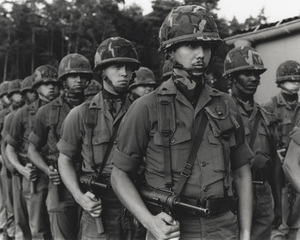
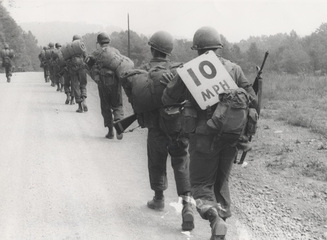
"If Basic Training documented an overly confident army (as characterized by one officer’s declaration, 'The United States Army has never lost a war,'), then Manoeuvre is documenting the aftermath of such brashness. Under Wiseman’s characteristic impartial direction, uncertainty and insecurity mar the illusion of an institution that typically presents itself as invulnerable, thus offering an unusually nuanced portrait of an institution all too often stereotyped as one-dimensional."

Read my full review of Frederick Wiseman's Manoeuvre online here at Not Coming to a Theater Near You.

http://notcoming.com/reviews/manoeuvre/

Wednesday, June 11, 2008

Monsieur Verdoux (1947)

"A murderous attack on bourgeois conventionality, Charlie Chaplin’s Monsieur Verdoux represents the apex of the artist’s subversive humor. Chaplin’s films have always been anti-establishment, favoring marginal characters cast aside by society and left to fend for themselves."

Read my full review of Monsieur Verdoux here at The L Magazine.

http://thelmagazine.com/6/16/Film/feature4.cfm?ctype=2

Sunday, June 08, 2008

Frederick Wiseman's "Basic Training" (1971)

"Even without the presence of a subjective voice-over narration, it’s difficult not to read the repeated shots of hand-to-hand combat with stuffed dummies in light of the ultimate goal of training: to fight in Vietnam. Wiseman’s insight isn’t at all an irony, but rather an incongruity between the controlled circumstances during training and the actual circumstances in which they will have to utilize their lessons."

Read my full review of Frederick Wiseman's Basic Training online here at Not Coming to a Theater Near You.

http://notcoming.com/reviews/basictraining/

Wednesday, May 28, 2008

New Song! New EP! Modern Silent Cinema!

Just posted a new song called "Than Burning" on MySpace from my upcoming EP, "Gets Hiccupy." The artwork (featured here) is by Mat Hinkel of Mat Design. I think he did a pretty awesome job. Check out his page and give him some applause! Anyway, check out the song, leave some comments, let me know if you want a copy of the album.

www.myspace.com/modernsilentcinema for more info.

Wednesday, May 14, 2008

Little Fugitive (1953)

"Little Fugitive delicately blends documentary realism and candid-camera style photography with a sparse, unobtrusive narrative, the combination of which recalls equally the light touch of early cinema actualities and 1940s Italian Neorealism. Engel’s background with the Photo League, as well as Orkin’s newsreel training during WWII, give the film’s portrait of New York City, and particularly Coney Island, a staggering, nostalgia-inducing authenticity."

Read my full review of Little Fugitive online here at The L Magazine.

http://thelmagazine.com/6/13/Film/feature3.cfm?ctype=2

Sunday, May 04, 2008

Idiots and Angels (2008) Tribeca Film Festival Preview

"The lovingly sullen atmosphere of the film never falls into misanthropy, partially because Plympton (and his audiences) find too much joy in laughing at the characters’ ornery behavior and the bizarre way the situations resolve themselves. The detour may be long and nightmarish, but at the end of Plympton’s journey there is redemption and hope, however—as Penelope Huston said of the endings of Preston Sturges’ films—always with a Cheshire cat’s grin."

Read my full review of Bill Plympton's Idiots and Angels online here at The L Magazine.

http://www.thelmagazine.com/lmag_blog/blog/post__05010804.cfm

Thursday, May 01, 2008

Sita Sings the Blues (2008) Tribeca Film Festival Preview

As if to emphasize Sita’s relevancy for modern viewers, Paley interweaves into the narrative a contemporary story of a young woman whose boyfriend moves to India for work (just as Rama left to go hunting). Only instead of waiting behind, this woman packs her bags and moves to India of her own will. The ensuing domestic discontent becomes a counter-point to the original story, and offers a potential answer to the question of, “What does an ancient story like Sita’s have to do with today’s world?” Paley’s charming response confirms that the past can have quite a bit to say about the present.

Read my full review of Sita Sings the Blues online here at The L Magazine.

http://www.thelmagazine.com/lmag_blog/blog/post__04300806.cfm

Wednesday, April 30, 2008

Modern Silent Cinema - "For Every Mave (There's Some Poor Sap)"


New video for Modern Silent Cinema's "For Every Mave (There's Some Poor Sap)" from the new album "The Curtain Lecture." More info at www.myspace.com/modernsilentcinema

Tuesday, April 29, 2008

Katyn (2007) Tribeca Film Festival Preview

The real highlight of Katyn is Krzysztof Penderecki’s magnificent score...which often works its discordant melodies just beneath the surface of the film, subtly affecting the mood and quietly amplifying the overall sense of horror. For all its embracing of dissonance, there is something unexpectedly reticent and shy about Penderecki’s score, which makes it all the more commendable and effective.

Read my full review of Andrzej Wajda's Katyn online here at The L Magazine.

http://thelmagazine.com/lmag_blog/blog/post__04280809.cfm

Monday, April 28, 2008

The Caller (2008) Tribeca Film Festival Preview

'The Caller thinks that by virtue of leaving certain plot elements and character motivations unexplained that it will become “mysterious." Instead, the film becomes a lame exercise in sub-par genre clichés, devoid of any sense of intrigue or suspense in either its story or characters.'

Read my full review of The Caller online here at The L Magazine.

http://thelmagazine.com/lmag_blog/blog/post__04240818.cfm

A President to Remember (2008) Tribeca Film Festival Preview

"A President to Remember seems to be the type of documentary that Primary was providing an antidote for. This new film is comprised largely of Kennedy’s telecast speeches, as well as footage from Drew’s four previous Kennedy films, strung together with narration from Alec Baldwin that negates any of the controversies and contentions about Kennedy’s presidency, reducing him to almost picture-book simplicity."

Read my full review of Robert Drew's A President to Remember online here at The L Magazine.

http://thelmagazine.com/lmag_blog/blog/post__04240817.cfm

My Winnipeg (2007) Tribeca Film Festival Preview

'Maddin’s narration (performed by Darcy Fehr, who previously performed as “Guy Maddin” in Maddin’s Cowards Bend the Knee) carries echoes of David Goodis’ noir lamentations, and while he speaks cynically about his hometown and its citizens, referring to them as “sleepwalkers,” he never forgets how closely linked to them he is (reinforced by the constant reminder to “stay awake” less he forget to get off the train and wake up back home in Winnipeg).'

Read my full review of Guy Maddin's My Winnipeg online here at The L Magazine.

http://www.thelmagazine.com/lmag_blog/blog/post__04240813.cfm

Wednesday, April 23, 2008

Roman de Gare (2007)

On the way to her engagement party, a woman is dumped by her fiancé at a gas station. A mysterious man (who may or may not be either a serial killer or a bestseller’s ghostwriter) offers her a ride back to her parents’ house, and she asks him to pretend to be her fiancé for one night. Roman de Gare is undeniably cunning with a deft mix of mystery and romance (a Lelouch specialty), though the ending is ultimately more clever than satisfying.

Read my full review of Claude Lelouch's Roman de Gare online here at The L Magazine.

http://www.thelmagazine.com/6/11/Film/feature7.cfm?ctype=2