Monday, August 17, 2009

World Nomads: Haiti at The French Institute


It is only fitting that the French Institute would choose to open its World Nomads: Haiti film series with Jonathan Demme's The Agronomist (2004), a documentary about Jean Dominique, who (among other things) happened to found Haiti's first Cine Club at the French Institute in Port-au-Prince in 1961. Co-curated by Demme with filmmaker David Belle (founder of Ciné Institute, Haiti's film school) and the French Institute's Marie Losier, the series — along with its companion Haitian Documentary Series at The Maysels Institute — makes available a national cinema that has received far too little exposure, either in theaters or on DVD.

Read my full coverage of World Nomads: Haiti here at The L Magazine.

Departures (2008)


On the one hand, it's obvious why Departures won the Academy Award for Best Foreign Film. It's overflowing with a familiar cloyingness that won't alienate audiences, and yet there's ample "foreign-ness" to make it appealingly exotic. Recently laid-off Tokyo cellist Masahiro Motoki returns to his hometown with his wife (J-pop superstar Ryoko Hirosue) and secretly begins work as a mortician. Ashamed, he keeps it a secret from her — and, expectedly, she and the town find out and ostracize him.

But then there's the influence of Juzo Itami's uncouth, bodily humor, which exerts itself in Depatures through Motoki's boss, played by Tsutomu Yamazaki of Itami's Tampopo and The Funeral. Whether slobbering over fried chicken, making off-color jokes about rotting corpses or using Motoki as a "human model" for the ritualistic preparation of the body (which includes stuffing gauze in unwanted areas), Yamazaki brings a much-needed inappropriateness to the film. His zest for pervy unpretentiousness does not go unappreciated.

Originally published in The L Magazine.

The Outfit (1973)


Robert Duvall plays Parker (here called Macklin) with an understated hardboiled demeanor. No cracking wise here — Duvall understands that he is playing a businessman whose cool head and emotionless disconnect isn't a sign of sociopathy but of his integrity. After foiling a hitman's attempt on his life, Macklin discovers that an organization known as The Outfit is after him for knocking over one of their banks. No beating around the bush, he goes straight to the man responsible for placing the hit, Menner (Tim Carey, with his characteristic élan), robbing him of all his poker winnings and demanding $250,000 for the inconvenience of almost being killed.

Read my full review of The Outfit here at The L Magazine.

The Housemaid (1960)


Filming the story almost entirely in a cluttered, half-finished home, Kim Ki-young makes full use of narrow corridors and glass-paneled sliding doors to emphasize the sense of global paranoia that runs rampant throughout The Housemaid. Filming through chairs, banisters and windows, he turns the home into an inescapable prison of unrepressed passions. Once the skeletons come out of the closet with a vengeance in the film's second half, it is as though the outside world ceases to exist. This pulp-chamber drama reminds of something that Gil Brewer might have penned for that publisher of lurid poetics Gold Medal. In fact, both Brewer's 13 French Street (1951) and The Housemaid both share a common nightmare of corruption of the middle class home and the perversion of its moral system.

Read my full review of The Housemaid here at The L Magazine.
10 Rillington Place (1971)


If 10 Rillington Place weren't based on real events, it would take the warped mind of Jim Thompson to imagine such paranoid, psychosis-driven characters as the soft-spoken serial killer John Reginald Christie (Richard Attenborough) and his dim-witted, unknowing cohort Timothy John Evans (John Hurt). Christie is a closet deviant who lures desperate women to his home under false pretenses of being a doctor. The illiterate Evans moves his wife and child into the apartment above Christie because it's all he can afford. His life is nothing but two rooms the color of rotting mouse fur, filled with furniture his wife neglected to pay, and a child on the way that he can't afford. Unfortunate circumstances have thrown the group together, and while Christie's phony doctoring seemingly offers Evans and his wife a way out of this purgatorial existence, it's only the beginning of a descent into murder, madness, and the overbearing weight of guilt that's enough to bury any man alive and make them wish for the gallows...

Read my full review of 10 Rillington Place here at The L Magazine.

The GoodTimesKid (2005) and Mantrap (1926)


From Benten comes The GoodTimesKid (2005), the second feature from Azazel Jacobs (whose latest film, Momma's Man, was one of the best films of 2008, and is available on DVD from Kino). With the exception of a brief prologue, the film unfolds throughout the course of a single day as the unspoken ennui and anxiety of a trio of alienated misfits manifest themselves through spontaneous relationships and mad dashes for wild, illogical dreams...

Also, just out from Sunrise Silents is a never-before-available silent film, Mantrap (1926), starring that iconic flapper of the silver screen Clara Bow (who was only twenty-one at the time of the film's release). And while her role as the titular "It" girl from It (1927) certainly defined a bobbed-hair zeitgeist, it has also come to be the sole definer of her career (outside of the cartoon she inspired, Betty Boop). Mantrap's arrival on DVD is a welcome reminder of the flirtatious charm and uninhibited sexuality that were the key ingredients of Bow's comedic style...

Read my full review of The GoodTimesKid and Mantrap here at The L Magazine.

Tuesday, July 28, 2009

"Bardelys the Magnificent" (1926)


Bardelys the Magnificent (1926) marks Gilbert's fifth collaboration with director King Vidor, who also led Glibert to two of his greatest triumphs with The Big Parade (1925) and La Boheme (1926), breaking him out of the “pretty boy” mould and giving him challenging, meaty roles which brought his hitherto untapped acting potential. Vidor, similarly an unfortunately forgotten figure, was one of the top filmmakers of the 1920s, with a rarely equaled gift for naturalistic yet poetic storytelling, effortlessly moving between comedy, romance, drama and — as Bardelys the Magnificent proves — action, as well. A comic swashbuckler in the Douglas Fairbanks tradition (and one of the few that actually deserves the comparison and rivals any of the master's own films), Bardelys the Magnificent features Gilbert as a notorious ladykiller of the court, handing out lockets with snippets of his hair (which really come from a wig) like there's no tomorrow. When his abilities to win any woman are challenged, Gilbert masquerades as a wanted rebel in order to win the damsel’s hand. Unfortunately, he also wins the attention of the law, who want to hang him for his crimes against the king.

Read my full review of Bardelys the Magnificent here at The L Magazine.

"The John Barrymore Collection"


Considered one of the great actors — of both stage and screen — of his day, John Barrymore is the subject of an eponymous new box set from Kino, featuring four of the performer's silent pictures made between 1920 and 1928. Showing off his wide range of skills and charms, the set reminds us why the performer was once so beloved by audiences, and why he deserves to continue to be so. Despite his stage training and theatrical family background (he came from a long line of actors, and his siblings were the equally renowned Lionel and Ethel), John had a natural presence on screen. He may be best remembered for his screwball hamming in Twentieth Century (1934) opposite Carole Lombard, but he is anything but histrionic or over-the-top in these four films. His subtle but communicative control of bodily and facial gestures, debonair persona and iconic good looks make for a commanding screen presence.

Read my full review of The John Barrymore Collection here at The L Magazine.

"Last Year at Marienbad" (1961) and "Diary of a Suicide" (1972)


The attraction of the enigmatic has rarely been so strong as in a pair of French avant-garde films, one returning to DVD and one new to the format. Alain Resnais' Last Year at Marienbad (1961) and Stanislav Stanjoevic's Diary of a Suicide (1972) share not just two actors — the sphinx-like Delphine Seyrig and the inscrutable, deadpan Sacha Pitoeff — but also a common romanticized ideal regarding the mystery of narrative. The central action of both films is, essentially, one character telling a story to another, though this hardly does justice to either of the films' richly nuanced scripts or the entrancing performances of the actors. Both films feed off our desire for resolution and clarity, and in denying — or drawing out — our needs, they become commentaries on listening and perception as much as storytelling.

Read my reviews of Last Year at Marienbad and Diary of a Suicide here at The L Magazine.

Au Bonheur Des Dames (1930)


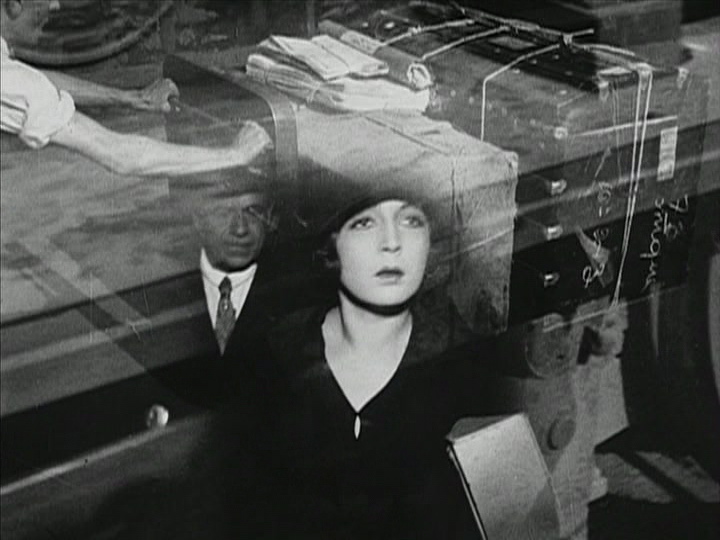
Concurrently a modernist fantasia and urban nightmare, Au Bonheur Des Dames focuses on the rivalry between a fast-rising department store, Ladies' Paradise, and a small mom-and-pop storefront across the street. A 20-year-old Dita Parlo (that vision of monochromatic beauty from Vigo's L'Atalante and Renoir's Grand Illusion) stars as the young woman caught between the two businesses. Arriving in Paris to work in her uncle's small fabric shop, Parlo finds the sky literally raining advertisements — planes overhead are dropping flyers for Ladies' Paradise. In an urban montage that rivals the surreal multiple-exposures of Murnau's Sunrise and Walter Ruttmann's Berlin: Symphony of a Big City, Parlo is accosted by visual representations of the clamor and crowds of the metropolis, a sequence which culminates in the excessive splendor of Ladies' Paradise, a department store to end department stores. A palace of fast-moving crowds, shiny objects, grand staircases and sickeningly ornate architecture, the department store is a beastly manifestation of all of consumerism's grand promises.

Read my full review of Au Bonheur Des Dames here at The L Magazine.

Shinobi no Mono 4: Siege (1964)


The fourth in a series of eight films chronicling the role of the ninja in Japan's turbulent feudal past, Shinobi no Mono 4: Siege (1964) opens at the dawn of the Tokugawa Period, as a peace treaty between the reigning Shogun and his rival clan, the Toyotomi, is signed. The treaty, however, is just the calm before the storm, as the Toyotomi get word of the Tokugawa's secret plotting to destroy them once and for all. Coming to their rescue is legendary ninja Kirigakure (series star Raizo Ichikawa, who made nearly 100 films in his fourteen-year career, cut short by his death at the age of 38), but when he is kidnapped in a cunning ambush by enemy ninjas, even he must wonder if defeat is inevitable.

Read my full review or Shinobi no Mono 4: Siege here at The L Magazine.

"Man Hunt" (1941)


Known mostly for his Weimar-era silent films, Fritz Lang's career as an exile in Hollywood is all too often overlooked not only by audiences, but also by home video distributors. His 1927 sci-fi epic Metropolis (1927) may get all the buzz, but it's hard to deny that it is heavily marred by wife Thea von Harbou's cloying and sentimental script. Far better are Dr. Mabuse, The Gambler (1922) and M (1931), neither of which have lost any of their edginess or grit after over seven decades, and both of which are available on nicely restored DVDs by Kino and Criterion, respectively. Slowly but surely, his near-forgotten American films, many of which are either on par or superior to his work in Germany, are making their way to DVD. Just released today is his near-forgotten Man Hunt (1941), an anti-Nazi thriller whose masterfully and subtly crafted suspense rises above any mere label of propaganda.

Read my full review of Man Hunt here at The L Magazine.

"Falling Down" (1993)


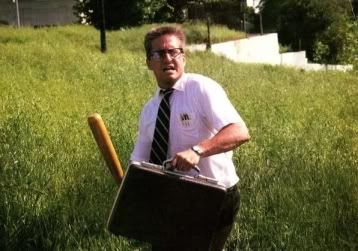
"The street was mine," P.I. Mike Hammer lamented in Mickey Spillane's One Lonely Night back in 1952, acknowledging a loss of security and identity as The City mutated out-of-control into a messy, violent, overpopulated asphalt jungle. Forty-one years later, the phrase echoed loudly throughout Joel Schumacher's nightmare of urban discontent, Falling Down (1993), which is being rereleased today in both a Deluxe Edition DVD and Blu-Ray. Time has only shown how bold and audacious Schumacher's film was, from its claustrophobic opening highway scene borrowed from Fellini's 8 1/2 to a high-noon showdown on a Venice Beach pier that recalls the hardboiled romanticism of Jean-Pierre Melville. And then there's the matter of its anachronistic central character, a noir protagonist straight out of the 1950s who defies notions of hero and antihero, victim and villain. Out of work, prevented from seeing his daughter on her birthday by a restraining order, and stuck a traffic jam on a sweltering summer morning — Michael Douglas just snaps. Abandoning his car, he crosses Los Angeles on foot, exacting vengeance for all of society's hypocrisy and corruption.

Read my full review of Falling Down here at The L Magazine.

"It's Love I'm After" (1937)


One of the lesser-known entries in the screwball cycle of the 1930s is not only arguably one of the best, but until recently also one of the most elusive. Warner Archive has solved that problem by giving It's Love I'm After (1937) its first-ever home video release. This comedy of remarriage — one of screwball's most reoccurring themes, as in 1937's The Awful Truth and 1940's The Philadelphia Story — stars Leslie Howard and Bette Davis as a bickering theatrical couple whose petty, narcissistic arguments perpetually result in postponing their marriage.

Read my full review of It's Love I'm After here at The L Magazine.

"The 10th Victim" (1965)


Originally released in 1965 and based on a story by Robert Sheckley, Elio Petri's The 10th Victim (just out on DVD from Blue Underground) is a mod ménage of La Dolce Vita, James Bond and The Most Dangerous Game. The film is set in the then-futuristic 21st century; we've lived to see some (but thankfully not all) of Petri's amorally corrupt worldview come to fruition. Marcello Mastroianni and Ursula Andress are players in the world's most popular game: a real-life manhunt in which two participants are randomly chosen by a computer, one to be a hunter, the other to be the hunted. After ten successful rounds, you win a million dollars and the elite status as a "decathlete." The world is their battlefield (except for churches, bars, barbershops and a couple of other off-limits locales) — and other than parking violations not being tolerated, there are no rules.

Read my full review of The 10th Victim here at The L Magazine.

Sunday, July 26, 2009

Check out Only Good Movies Blog

The good folks over at Only Good Movies have come up with a list of the Top 100 Movie Heroes, broken down into genre: Action/Adventure; Horror; Western; Comic Book; Sci-Fi; Dramatic; Sports; Fantasy; Martial Arts; and Animated. They were kind enough to include a link to my review of Rambo: First Blood Part II. Check out the whole list here.

http://www.onlygoodmovies.com/blog/movie-megalists/top-100-movie-heroes/

Monday, July 06, 2009

Rambo: First Blood Part II (1985)


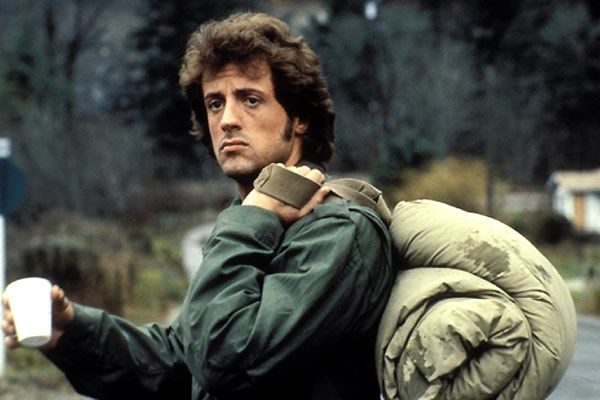
If there’s a fundamental difference between First Blood and the sequel made three years later, Rambo: First Blood Part II, it’s that Rambo’s psychological scars seemed to have finally healed. He is no longer the tormented vet wandering the woods of America in search of vestiges of some unknown he could vaguely call “home.” Instead, as the film opens, we find him in prison, breaking rocks under the hot sun. “In here, at least I know where I stand,” he tells Col. Trautman, who has come to arrange his release in order to send him on a mission to locate missing POWs still believed to be in Vietnam. As Rambo stares through the chain-link fence at his former commander, his gaze is cool yet heated. Distrust and disappointment, that unrequited rage, still boils beneath the surface, yet he knows that he has lost the two wars that meant the most to him: the one in Vietnam where he was reborn as a soldier, and the war back at home to make his nation understand what he and his fellow soldiers went through. It’s not that he’s defeated, but that he’s given up the good fight. Rambo knows now that the world won’t listen, won’t change.

Read my full review of Rambo: First Blood Part II here at Not Coming to a Theater Near You.

Sunday, July 05, 2009

First Blood (1982)


Rambo’s cinematic nativity First Blood borrows significantly from America’s pastoral heritage. Like some mythological figure, he – among the most iconic of action heroes – is inexorably connected to the woods—they gave birth to him (in more ways than one), and it is to the woods that he both continually comes and goes. Tempting as it is to rhapsodize over the many awesome things Rambo does in the movie – from ambushing the police in the woods to his one-man apocalypse that brings a city to its knees – it’s crucial to consider the natural progression of the film itself. Bits of action are orchestrated between largely atmospheric sequences that not only call attention to the gorgeous location photography shot at Golden Ears Park in British Columbia, but also carry an ethereal presence not often associated with the action genre. An elegiac prologue at a country home gives way to a slow burning urban paranoia that culminates in a chase leading back to the woods. Always back to woods, like an irrepressible refrain. Something innate within Rambo beckons him to return to nature, a call of the wild to which he always answers.

Read my full essay on First Blood here at Not Coming to a Theater Near You

Wednesday, June 17, 2009

Brighton Rock (1947)


Wracked with religious guilt and anxieties of inadequacy (both sexual and political) on a Napoleonic level, Attenborough makes a perfect noir protagonist. He combines the boyish good looks of Farley Granger and the psychopathic placidity of Richard Widmark, but also brings a deeply rooted spirituality that offers no easy solutions and only complicates his psyche even more. Thank goodness Greene came on board to co-write the script with Terence Rattigan: like a good Catholic, Greene ensures that punishment outweighs the possibility of redemption...

Read the full review here at The L Magazine.

L'important c'est d'aimer (The Important Thing Is To Love) (1975)

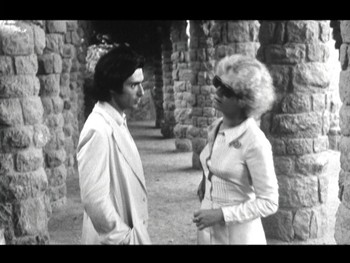
Less than a year old, newcomers to the DVD field Mondo Vision have been championing the overlooked ouerve of Andrzej Zulawski, a Polish filmmaker (and one-time assistant to Andrzej Wajda) who has spent much of his career working in France. The company made their debut with his movie The Public Woman (1984); today marks Mondo Vision's second release, Zulawski's L'important c'est d'aimer (The Important Thing Is To Love) (1975), appearing for the first time on home video here in North America in both a single disc and two-disc Limited Edition...

Read the full review here at The L Magazine.