Tuesday, July 28, 2009

"It's Love I'm After" (1937)


One of the lesser-known entries in the screwball cycle of the 1930s is not only arguably one of the best, but until recently also one of the most elusive. Warner Archive has solved that problem by giving It's Love I'm After (1937) its first-ever home video release. This comedy of remarriage — one of screwball's most reoccurring themes, as in 1937's The Awful Truth and 1940's The Philadelphia Story — stars Leslie Howard and Bette Davis as a bickering theatrical couple whose petty, narcissistic arguments perpetually result in postponing their marriage.

Read my full review of It's Love I'm After here at The L Magazine.

"The 10th Victim" (1965)


Originally released in 1965 and based on a story by Robert Sheckley, Elio Petri's The 10th Victim (just out on DVD from Blue Underground) is a mod ménage of La Dolce Vita, James Bond and The Most Dangerous Game. The film is set in the then-futuristic 21st century; we've lived to see some (but thankfully not all) of Petri's amorally corrupt worldview come to fruition. Marcello Mastroianni and Ursula Andress are players in the world's most popular game: a real-life manhunt in which two participants are randomly chosen by a computer, one to be a hunter, the other to be the hunted. After ten successful rounds, you win a million dollars and the elite status as a "decathlete." The world is their battlefield (except for churches, bars, barbershops and a couple of other off-limits locales) — and other than parking violations not being tolerated, there are no rules.

Read my full review of The 10th Victim here at The L Magazine.

Sunday, July 26, 2009

Check out Only Good Movies Blog

The good folks over at Only Good Movies have come up with a list of the Top 100 Movie Heroes, broken down into genre: Action/Adventure; Horror; Western; Comic Book; Sci-Fi; Dramatic; Sports; Fantasy; Martial Arts; and Animated. They were kind enough to include a link to my review of Rambo: First Blood Part II. Check out the whole list here.

http://www.onlygoodmovies.com/blog/movie-megalists/top-100-movie-heroes/

Monday, July 06, 2009

Rambo: First Blood Part II (1985)


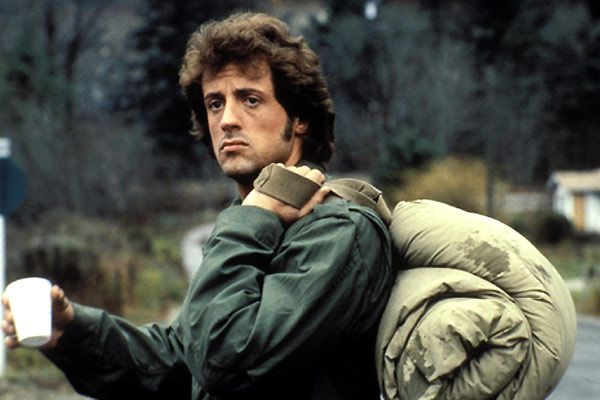
If there’s a fundamental difference between First Blood and the sequel made three years later, Rambo: First Blood Part II, it’s that Rambo’s psychological scars seemed to have finally healed. He is no longer the tormented vet wandering the woods of America in search of vestiges of some unknown he could vaguely call “home.” Instead, as the film opens, we find him in prison, breaking rocks under the hot sun. “In here, at least I know where I stand,” he tells Col. Trautman, who has come to arrange his release in order to send him on a mission to locate missing POWs still believed to be in Vietnam. As Rambo stares through the chain-link fence at his former commander, his gaze is cool yet heated. Distrust and disappointment, that unrequited rage, still boils beneath the surface, yet he knows that he has lost the two wars that meant the most to him: the one in Vietnam where he was reborn as a soldier, and the war back at home to make his nation understand what he and his fellow soldiers went through. It’s not that he’s defeated, but that he’s given up the good fight. Rambo knows now that the world won’t listen, won’t change.

Read my full review of Rambo: First Blood Part II here at Not Coming to a Theater Near You.

Sunday, July 05, 2009

First Blood (1982)


Rambo’s cinematic nativity First Blood borrows significantly from America’s pastoral heritage. Like some mythological figure, he – among the most iconic of action heroes – is inexorably connected to the woods—they gave birth to him (in more ways than one), and it is to the woods that he both continually comes and goes. Tempting as it is to rhapsodize over the many awesome things Rambo does in the movie – from ambushing the police in the woods to his one-man apocalypse that brings a city to its knees – it’s crucial to consider the natural progression of the film itself. Bits of action are orchestrated between largely atmospheric sequences that not only call attention to the gorgeous location photography shot at Golden Ears Park in British Columbia, but also carry an ethereal presence not often associated with the action genre. An elegiac prologue at a country home gives way to a slow burning urban paranoia that culminates in a chase leading back to the woods. Always back to woods, like an irrepressible refrain. Something innate within Rambo beckons him to return to nature, a call of the wild to which he always answers.

Read my full essay on First Blood here at Not Coming to a Theater Near You

Wednesday, June 17, 2009

Brighton Rock (1947)


Wracked with religious guilt and anxieties of inadequacy (both sexual and political) on a Napoleonic level, Attenborough makes a perfect noir protagonist. He combines the boyish good looks of Farley Granger and the psychopathic placidity of Richard Widmark, but also brings a deeply rooted spirituality that offers no easy solutions and only complicates his psyche even more. Thank goodness Greene came on board to co-write the script with Terence Rattigan: like a good Catholic, Greene ensures that punishment outweighs the possibility of redemption...

Read the full review here at The L Magazine.

L'important c'est d'aimer (The Important Thing Is To Love) (1975)

Less than a year old, newcomers to the DVD field Mondo Vision have been championing the overlooked ouerve of Andrzej Zulawski, a Polish filmmaker (and one-time assistant to Andrzej Wajda) who has spent much of his career working in France. The company made their debut with his movie The Public Woman (1984); today marks Mondo Vision's second release, Zulawski's L'important c'est d'aimer (The Important Thing Is To Love) (1975), appearing for the first time on home video here in North America in both a single disc and two-disc Limited Edition...

Read the full review here at The L Magazine.

Tuesday, May 12, 2009

Priced to Own: Time's Up for the Video Store?

With Virgin Megastore closing in the upcoming weeks, Netflix fast running local video stores out of business, the rise of streaming media online, the continued hubbub about piracy, and the still-uncertain introduction of Blu Ray discs, the fate of the DVD is certainly questionable. Nor is VHS as "obsolete" as many would think: many films are still unavailable on a digital format, and with the industry in such a state of flux, the once assured market for obscure films on home video is no longer a guarantee. That doesn't stop stores from practically giving away VHS tapes of otherwise impossible-to-find movies like King Vidor's (1920), which I found for $3 at I-won't-say-where and have never seen on eBay or Amazon (or in any other stores). In the midst of all this, two of Hollywood's oldest surviving studios, MGM and Warner Bros., are continuing to roll out old movies from their vaults in restored editions on DVD, but both are using drastically different means that belie the uncertainty of the home video market....

Read the full piece at The L Magazine.

Monday, May 11, 2009

Tod Browning at Film Forum


A teen runaway turned circus barker and vaudevillian, Tod Browning's sideshow life on the fringes of society foreshadowed the outcasts that would become the epicenter of his films. Whether theatrical performers themselves (such as in The Unknown and Freaks) or criminals who use theatricality as part of their schemes (The Blackbird and The Devil Doll), Browning's characters are linked by a shared anguish which manifests itself physically. It is only fitting that Browning learned filmmaking under the guidance of D.W. Griffith, for whom he was an actor. Whereas Griffith's innovative close-ups of Lillian Gish's face to reflect her pure soul, Browning used Lon Chaney's entire body to convey the impurity of his. And for five consecutive Mondays beginning May 11th, sin and lust will rule the big screen as Film Forum celebrates macabre master Browning...

Read my full essay on Tod Browning here at The L Magazine.

Tuesday, May 05, 2009

A Grin Without a Cat (1977)


One could view Chris Marker’s A Grin Without a Cat (1977), just released on DVD by Icarus Films Home Video, as an aggressive antidote to such dumbed-down fairytales of that tumultuous time period, but that would hardly scratch the surface of the film’s profundity. In this three-hour tome to two decades of political struggle around the globe, Marker charts the idealistic rise of the international leftist movement in the 1960s and its problematic fracturing in the subsequent decade. Using his characteristic essay-film format, Marker culls interviews and footage from disparate sources, including propaganda and activist films, and weaves them into a complex tapestry of perpetually diverging political viewpoints...

Read the full review here at The L Magazine.

Wednesday, April 29, 2009

Alain Resnais: A Decade in Film


KimStim and Kino are shedding much needed (and highly desired) light on the career of French auteur Alain Resnais by making a quartet of his 1980s movies available on home video for the first time. Known primarily for a pair of arthouse classics, Hiroshima, Mon Amour (1959) and Last Year at Marienbad (1961), and the short concentration camp documentary Night and Fog (1954), Resnais’s filmography is spread out over the course of 70+ years — and the octogenarian auteur’s latest film is set to premier at this year’s Cannes Film Festival. But while most of us have to wait for Les herbes folles until it screens over here (a New York Film Festival hopeful?), in the meantime we have these four 80s flicks to remind us of his singularly poetic sensibility.

Read my full review of Alain Resnais: A Deacde in Film here at The L Magazine.

Leon Morin, Priest (1961)


Jean-Pierre Melville’s name evokes images of fedoras and lengthy trench coats billowing like church robes. In appropriating iconic symbols of American gangster films, Melville created his own world, in which hardboiled mythologies meshed with the philosophical concerns of post-World War II France. But after several films in this mold, such as Bob le Flambeur and Deux Hommes dans Manhattan, Melville wanted a change. Film historian Tom Milne writes: “In a spirit of contradiction, it seems, since the Nouvelle Vague was by then at flood tide, he announced with his sixth film [Léon Morin, Priest] in 1961, that he was tired of being the darling of a handful of cineastes.”

Read my full review of Leon Morin, Priest here at The L Magazine.

Thursday, April 23, 2009

"The Films of Shirley Clarke: Rebel With a Cause"


“There’s a dissatisfaction with merely going to the movies,” proclaims Shirley Clarke in Noël Burch and Andre S. Labarthe’s documentary Rome Burns: A Portrait of Shirley Clarke (1970). Throughout, she is never without two things: a cigarette between her lips, and a sincere humility. Seated on the floor of a Parisian apartment with friends and colleagues (including Jacques Rivette and Yoko Ono), the New York-native Clarke opens up about her revolutionary ideas about cinema, as well as her own misgivings about her earlier works. The three features she had shot at that point—The Connection (1962), The Cool World (1964), and Portrait of Jason (1967)—wrenched burgeoning cinema verite trends in new, groundbreaking directions. But for every liberating frame that passed through her camera, Clarke saw more work that needed to be done. To her, the then-current relationship between the audience and the movie was antiquated: “I don’t want them separated by the screen anymore.” In fusing experimental, documentary, and narrative film techniques, Clarke was a significant force in creating “modern” cinema in the 1960s.

Read my full essay on Shirley Clarke here at Hammer to Nail.

http://www.hammertonail.com/genre/documentary/films-of-shirley-clarke-at-anthology/

Wednesday, March 25, 2009

2009 New Directors/New Films


"The standout of this year’s [New Directors/New Films] fest is So Yong Kim’s Treeless Mountain (pictured), the highly anticipated follow-up to Kim’s debut feature In Between Days, a Sundance and Berlin award winner from 2006. When a mother leaves her two daughters with their aunt in Seoul in order to finalize a divorce, she also leaves them with a piggy bank. When it is full, she tells them, she will return. And so they wait, grilling grasshoppers to sell to local youths, and counting their change. Kim saturates her film with the pregnant stasis of childhood, and her young actors, Hee Yeon Kim and Song Hee Kim, express more depth than any of this year’s leading or supporting Oscar noms."

Read my full coverage of the 2009 New Directors/New Films series here at The L Magazine.

Tuesday, March 17, 2009

Eclipse Series 15: Travels with Hiroshi Shimizu


"Our understanding of pre-World War II Japanese cinema has been limited not merely to those few films in distribution, but to those even in existence. Between unstable nitrate stocks (used for early films), poor preservation and earthquakes —not to mention World War II — most of those films are irrevocably lost to history. Contemporary American audiences’ conceptions, in particular, are formed almost exclusively by Yasujiro Ozu’s playful formalism and Kenji Mizoguchi’s tragic heroines. All of which makes Eclipse Series 15: Travels with Hiroshi Shimizu not only an exciting, long-overdue release, but also a historically redefining moment. For the first time, American audiences will have access to one of the foundational artists of Japanese cinema, whose prolific output between 1924 and 1959 (166 films) well exceeds the combined filmographies of Ozu and Mizoguchi."

Red my full review of Eclipse Series 15: Travels with Hiroshi Shimizu here at The L Magazine.

Monday, March 02, 2009

The Iron Mask (1929)


Douglas Fairbanks was the king of Hollywood in the silent era. Off-screen, he defined the dapper gentleman that was to be expected of Hollywood stars: his wife and queen was “America’s Sweetheart” Mary Pickford, and their castle was Pickfair, a palace where all of cinema’s royalty gathered. On-screen, though, he was something else all together—he was the embodiment of all the magic that the movies promised to provide.

Read my full review of The Iron Mask here at Not Coming to a Theater Near You.

http://www.notcoming.com/reviews/ironmask/

Thursday, February 26, 2009

The Wedding March (1928)


The Wedding March is, like its “creator,” uncompromising. Full of cruelty and perversion, this is not the vision of the world that the Hollywood of the 1920s projected. (Ironically, it certainly was the preferred off-screen lifestyle of the Hollywood of the 1920s.) Naivety is an alien concept, and innocence long since abandoned. And the token “happy ending”? Nowhere to be found. If this doesn’t sound like the Hollywood that you’re used to seeing, then Erich von Stroheim achieved his goal.

Read my full review of The Wedding March here at Not Coming to a Theater Near You.

http://www.notcoming.com/reviews/theweddingmarch/

Saturday, February 21, 2009

Street Angel (1928)


“Everywhere… in every town, in every street… we pass, unknowing, human souls made great by love and adversity.” Street Angel is not just the story of a gutter waif (Janet Gaynor) and an itinerant painter (Charles Farrell) who fall in love and must persevere against all the obstacles the world throws at them. Instead, Borzage elevates them to the level of gods. The streets they walk are not those of Naples, but of a mythological space akin to Mount Olympus. Everything, and everybody, is the absolute embodiment of an ideal: life is hardship, love is divine, fate is always against us, and people are either saints or devils. Or, as the title suggests, angels—fallen from the heavens, and left to battle here on earth.

Read my full review of Street Angel here at Not Coming to a Theater Near You.

http://www.notcoming.com/reviews/streetangel/

Thursday, February 19, 2009

"Must Read After My Death" (2008)


Everything is different in hindsight. Time heals certain wounds, while others fester and deepen with the passing days. Memories go in and out of focus. Problems either work themselves out, or else new dilemmas arise and take precedent, the old ones fading into the past. When the end is in sight, things just don’t look as bad as they once did. Perspective allows us to see things more clearly. And this is precisely what is missing in Morgan Dews’ piercing documentary Must Read After My Death, and also what makes the film so singular, so touching and traumatic to watch.

Read my full review of Must Read After My Death here at Hammer to Nail.

http://www.hammertonail.com/genre/documentary/must-read-after-my-death-this-american-life/

Lonesome (1928)


The addition of “talking” sequences are not the only sign that the silent age was almost over. In one scene, a character listens to a record alone in their room. Next door, someone else listens intently to the song. Sound traverses space to briefly unite them. Even though they are separate, they share in the experience together. Without the aid of a soundtrack, such a bond can only be intimated and not actualized. Lonesome was released twice—first as the silent picture it was intended to be, and later with a synchronized soundtrack with music, sound effects, and the few dialogue scenes. Fejos fully realizes the potential of the silent screen—but I think he also hints (perhaps unintentionally) at the future possibilities to come with the arrival of sound.

Read my full review of Paul Fejos' Lonesome here at Not Coming To a Theater Near You.

http://www.notcoming.com/reviews/lonesome/

Sunday, February 08, 2009

The Silence After Sound: Hollywood's Last Silent Movies


"The switchover from silent to sound in the American film industry, which began in late 1927, was primarily complete by 1929 — all of which begs to ask, what happened on American screens in 1928? It was a pivotal year in the transition, an entire year in which silent and sound pictures shared theater marquees, and when both were viable commercial artforms. Though silents would still exist in 1929, their era was not just numbered – it was practically over."

Read my full essay "The Silence After Sound: Hollywood's Last Silent Movies" online here at Not Coming to a Theater Near You.

http://notcoming.com/features/silenceaftersound/

Saturday, January 31, 2009

The Honeymoon Killers (1969)


"The Honeymoon Killers (1969) is more Cain than even James Cain himself. Martha Beck and Ray Fernandez, the film’s central lovers/killers, could easily take the place of any of Cain’s partners-in-crime. They’re just as cold-blooded and ruthless as duplicitous wife Phyllis Nirdlinger and insurance agent Walter Huff in Double Indemnity, and just as hot-blooded and passionate as vagabond Frank Chambers and restless waitress Cora Papadakis in The Postman Always Rings Twice. Yet unlike them, Martha and Raymond didn’t come from any author’s imagination—they came straight from the newspaper headlines of 1949."

Read my full review of Leonard Kastle's The Honeymoon Killers here at Hammer to Nail.

http://www.hammertonail.com/genre/drama/honeymoon-killers-the-noir-verite/

Thursday, January 22, 2009

Stahl vs. Sirk at Anthology Film Archives


"John M. Stahl and Douglas Sirk were fated to share a double bill. The passing decades have made it clear that these two icons of melodrama don’t merely reflect their respective time periods, but actively comment upon them. Moreover, as contract directors at Universal, both were fortuitously given the same material to adapt — which not only eagerly invites comparison, but also highlights their singularity as artists."

Read my full coverage of Anthology Film Archives' series Imitations of Life: Stahl vs. Sirk online here at The L Magazine.

http://thelmagazine.com/7/2/Film/feature9.cfm?ctype=2

Tuesday, January 13, 2009

ROSSELLINI’S HISTORY FILMS - The Change and Growth of An Independent Master


"But there’s also a larger debt that has gone unpaid for far too long, which is that Rossellini embodied a far more important concept of an 'independent filmmaker' that went beyond topics and aesthetics. He resisted labels and refused to be tied down to a single style. Yet the farther he moved away from the particularities of his earlier work, the more the world rejected Rossellini. He made a certain kind of movie, and that’s what they expected and, more importantly, understood. Such is the dilemma all artists face when they grow and change."

Read my full review of The Taking of Power by Louis XIV (1966) (Criterion Collection) and Eclipse Series 14: Rossellini’s History Films—Renaissance and Enlightenment online here at Hammer to Nail.

http://www.hammertonail.com/?p=551

Saturday, January 10, 2009

In Memoriam: Donald Westlake


"On New Year’s Eve, Donald Westlake, alias Richard Stark, went to that big bank heist in the sky – the “one last score” you never return from. The 75-year-old Brooklyn-native and writer of more than 150 books (not to mention numerous short stories and screenplays) died of a heart attack while on vacation in Mexico. Born in 1933, Westlake was one of the last remnants of a bygone literary era. He may have attended several colleges, but he never graduated from any. And he certainly didn’t learn writing from any “creative writing” class. Instead, he threw himself into the thriving pulp paperback market and began churning out novels at a rate that would scare many contemporary writers into an early retirement..."

Read my full article on Donald Westlake online here at The L Magazine.

http://www.thelmagazine.com/lmag_blog/blog/post__01080906.cfm

Wednesday, December 24, 2008

Hoppity Goes To Town (1941)


"WALL-E isn’t the only dystopic animated feature to tackle humankind’s destruction of the planet. Forty-seven years before Pixar’s social critique, there was brothers Max and Dave Fleischer’s Hoppity Goes to Town (1941), a Capra-esque tale of a young, idealistic grasshopper, Hoppity, who must not only confront the scheming, lecherous C. Bagley Beetle, but also save his bug community from the ever-expanding populace of Manhattan."

Read my full review of Hoppity goes to Town here at The L Magazine.

http://thelmagazine.com/lmag_blog/blog/post__12220808.cfm

Bigger Than Life (1956)


"Nicholas Ray’s Bigger Than Life feels closer to a suburban monster movie than to any conventional melodrama from the period. Even James Mason, who plays the grade-school teacher secretly moonlighting as a cabbie, undergoes stark physical, psychological and emotional changes that seem an uncanny parallel to the sci-fi mutation films that proliferated during the era. But instead of Godzilla rising from the ashes of nuclear destruction, Ray gives us Mason, your prototypical 1950s white-collar dad, who is collapsing under the strains of meeting the status quo."

Read my full review of Bigger Than Life here at The L Magazine.

http://thelmagazine.com/6/36/Film/film16.cfm?ctype=2

The Year in Rep

My Top 10 list of NYC-based repertory events that was published in The L Magazine. Hopefully those in the city were able to catch some of these...

-----

Ten cinematic spectacles that either can’t be replicated in the comfort of your own home, or wouldn’t be the same on DVD. Netflix, eat your heart out.

Mysterious Objects: The Films of Apichatpong Weerasethakul (Anthology, January) Two sold-out shorts programs were the real gems: minimalist manipulations of sound and space, and his characteristic interest in group aerobics.

Le Grand Franju (Anthology, March) Georges Franju’s career may be reduced to Eyes Without a Face, but this series reminded us of all the hallucinatory hybrids that we’re missing out on, like the biker-youth-over-the-cuckoo’s-nest Head Against the Wall.

Tomu Uchida (BAM, April) As a colleague wrote elsewhere: “Uchida's career is a jumble of high and low concerns, bright spectacle and dark corners, his responsive, protean style answering only to the needs of the moment — the stuff dreams are made of.”

Nakadai (Film Forum, June-July) 25 movies in almost as many days, plus an intimate conversation with the legendary dude himself? It’s like taking a graduate seminar in Tatsuya Nakadai without the bothersome homework.

3epkano (BAM/Walter Reade, July) For two nights this summer, two of silent cinema’s best films (F.W. Muruanu’s Sunrise and Paul Leni’s The Cat and the Canary) were not only revived but reborn through this Dublin experimental rock group’s eerily hypnotic scores.

Elliott Gould: Star for an Uptight Age (BAM, August) This reluctant role model is just as vital today as he was back in the day. And he brought along his personal 35mm print of Ingmar Bergman’s criminally neglected The Touch.

Hollywood on the Hudson (MoMA, September-October) The forgotten glory of New York filmmaking between the World Wars. Oh, the joys of obscure musicals and ethnic productions…

Carole Lombard
(Film Forum, November) This flaxen goddess already saw the country through one economic depression, so what’s one more?

Les Blank (Film Forum, November) The documentary guru of Americana is an underappreciated treasure, and his unique focus on food and music makes every screening a party.

Manny Farber
(Walter Reade, November) Extolling the unpretentious virtues of B-Movies long before it was hip to do so, the late Farber elevated film criticism to a high plateau that has rarely been surpassed.

Special mention goes out to the Orphan Film Symposium (NYU) for unearthing the strange, natural beauty of James Blue’s Kennedy-sponsored propaganda, and Lana Turner grilling a streak on live radio for WWII troops overseas, a true fetishist’s delight.

http://thelmagazine.com/6/36/Film/film13.cfm?ctype=2

Monday, December 22, 2008

"Essential Sturges" at Film Forum


"[Preston] Sturges somehow channeled the pandemonium of the Marx Brothers into a sedate, middle class milieu, and unearthed an encyclopedia of white-collar hypocrisy, idiosyncrasy, and hilarity. Small towns and big cities, ocean liners and offices—none of them are safe from Sturges’ apocalypse. Only those that jettison their safe, conveniently ways and embrace the chaos are able to come out on top..."

Read my full coverage of Film Forum's Essential Sturges here at Blank Screen NYC.

http://blankscreennyc.tumblr.com/post/66306424/preston-sturges-subversive-screwball

Tuesday, December 16, 2008

"Murnau, Borzage and Fox" DVD Box Set (2008)


"Among the most anticipated DVD releases of the year by cinephiles, Murnau, Borzage and Fox is to be admired for its daring and thorough offering of no less than twelve feature films, two “reconstructions” of lost films, two coffee table-sized books and one documentary, all housed within a ridiculously handsome faux-leather case. One can’t accuse Fox of going only halfway with this release; as with their comprehensive Ford at Fox box set released this time last year, Murnau, Borzage and Fox digs deep into the archives and comes up with a wealth of highly desired films. Truly a monumental release, this box set not only satiates the ravenous appetites of classic film lovers, it also opens up new critical and historical discourses that were, up to now, impossible because of restricted access to prints..."

Read my full review of Murnau, Borzage and Fox here at The L Magazine.

http://www.thelmagazine.com/lmag_blog/blog/post__12160802.cfm

Monday, December 15, 2008

Just Tony (1922)

"The visceral joys of the silent B-Western are on full display in Just Tony. Saloon brawls, wild stallions, ten-gallon hats, breathtaking desert ranges, gunfights, fistfights, races, chases—and even a love story to boot. For a 66-minute feature, there’s an incredible number of sub-plots working in conjunction with one another to make the movie all the more thrilling and tense. Each successive scene brings with it yet another complication... Always unpretentious, Just Tony shines in its ability to rework tried-and-true formulas into simple yet effective narratives brimming with charm."

Read my full review of Just Tony here at Not Coming to a Theater Near You.

http://www.notcoming.com/reviews/justtony/

Tuesday, December 02, 2008

Refracted Light: The Films of Quinto and Jean-Gabriel Albicocco


"The centerpiece of the retrospective is The Wanderer (1967) an adaptation of Alain-Fournier’s novel Les Gran Meaulnes. Like a rural fairy tale, the film begins with a young boy getting lost in the woods; like Alice, he ends up wandering through the proverbial “rabbit hole” and into a seemingly supernatural world of enchantment... Outdoing even himself, Quinto Albicocco's cinematography evokes the intoxicating beauty of the imagination through a pallet of smeared hues, shimmering lights, and wide-angle lenses that bend the image to his every whim."

Read my full review of The French Institute's series Refracted Light: The Films of Quinto and Jean-Gabriel Albicocco here at The L Magazine.

http://www.thelmagazine.com/lmag_blog/blog/post__12020803.cfm

Confessionsofa Ex-Doofus-ItchyFooted Mutha (2008)


"Regardless of how unconventional and experimental it is, more than anything Confessionsofa Ex-Doofus-ItchyFooted Muthais a joy to watch. It certainly breaks new ground, but never at the expense of its sense of humor. Van Peebles never seems as though he is trying to be obscure for the sake of being so; rather, he made the movie the only way he could. Take no prisoners. Make no excuses. Just make the movie by whatever means necessary. Melvin Van Peebles’ conviction and determination is nothing short of inspirational."

Read my full review of Confessionsofa Ex-Doofus-ItchyFooted Mutha here at Hammer to Nail.

http://www.hammertonail.com/?p=504

Wednesday, November 26, 2008

Mockery (1927)


"The fantastical demons that beset Benjamin Christensen’s career-defining Häxan may have gone into hiding for the Danish director’s second film made in Hollywood, Mockery, but they are not entirely absent. They’ve worked their way into every inch of Christensen’s characters, corrupting their morals, perverting their intents, and plaguing their souls."

Read my full review of Mockery here at Not Coming to a Theater Near You.

http://www.notcoming.com/reviews/Mockery/

Wednesday, November 19, 2008

Carole Lombard Retrospective at Film Forum


"In an era of dizzy dames and glamour queens, Carole Lombard was the best of both worlds. An earthly deity of the silver screen, she was more than just blonde and beautiful — she also possessed a quick wit and daffy lunacy that remains unsurpassed over seventy years later. Fiercely independent, sexually confident and always cunning, Lombard sent an ordered, masculine-driven society into an irreversible tailspin. Film Forum’s retrospective comprises old favorites and overlooked jewels, and serves as a reminder of just how modern and ahead of her time Lombard really was."

Read my full essay on Carole Lombard here at The L Magazine.

http://thelmagazine.com/6/33/Film/film1.cfm?ctype=2

Monday, November 03, 2008

“H2N’s Official Election Day 2008″ List

Hammer to Nail, that great "home for ambitious cinema" that allows me the privilege of writing for them, has posted an awesome collaborative feature: “H2N’s Official Election Day 2008″ List. All of the writers have contributed short pieces on their favorite political themed movies. Here are the two that I wrote, but PLEASE check out the site and read what everyone else has to say, as it's a heck of a good time and might give you a few ideas of how to pass the hours as you wait for the final results tomorrow.

Great McGinty, The (Preston Sturges, 1940)— A reminder of why we are all so cynical, Sturges’ film satirizes not only a crooked political system, but also a thickheaded general public who refuses to open their eyes to the reality of things. A bum (Brian Donleavy) assists a corrupt politician with voter fraud, and winds up a much-loved town mayor. When the public learns the truth, they still love him! Unfortunately reminiscent of our current political climate.

Mr. Smith Goes to Washington (Frank Capra, 1939) — Capra’s unstoppable optimism has never been more affecting or endearing than in Mr. Smith Goes to Washington. As the doe-eyed senator who tackles a corrupt political system, James Stewart becomes a hero to all: the embodiment of a pure, untarnished political ideal. Capra’s unconditional sincerity is enough to turn even the coldest cynic into a believer once again, and gives us hope that a real “Mr. Smith” does exist and might be elected.

Read the full featuve here at Hammer to Nail.

http://www.hammertonail.com/?p=462

Wednesday, October 29, 2008

The Master of Melodrama: The Films of Teuvo Tulio


"In one of the most exciting rediscoveries of the year, BAM’s retrospective of Finnish auteur Teuvo Tulio offers four masterpieces of melodrama, all made between 1938 and 1946, whose cinematic grandeur will be nothing less than magnificent on the big screen. With a painter’s eye, Tulio can turn an idyllic country landscape into an earthly heaven or a frenzied nightmare — and often his films fluctuate between those two extremes."


Tuesday, October 28, 2008

Billy the Kid (2007)


Unlike the exaggerated characters in even the best high school movies, there’s something unshakably authentic to this fifteen year-old-kid from Brunswick, Maine with a rat tail who wears trucker t-shirts with cut-off sleeves. And it’s not just because Billy the Kid is a work of non-fiction, but rather that director Jennifer Venditti has managed the incredible feat of both finding and conveying cinematically a character who is absolutely singular and unique, and at the same time exists as an “everyman” who sums up our collective adolescence.


Monday, October 27, 2008

Night and Day (Bam gua nat) (2008)


"Hong’s latest film, Night and Day, extends his career-long preoccupation with the confused male psyche—though, at this point we could almost say that Hong’s films are exercises in ritual emasculation: social experiments in which his male protagonists are given center stage to exercise their libido, only to expose (or, in some cases, to reaffirm) their impotency and inadequacy. At the start of Night and Day, several successive intertitles set up the context for the story: Sung-nam, a forty-something Korean artist, smokes marijuana (for the first time) with an American exchange student, who is subsequently arrested and divulges the artist’s name. Fearing incarceration, the artist abandons his wife and flees to Paris, where the film begins."

Wednesday, October 22, 2008

Zidane: A 21st Century Portrait (2006)


"The span of the film is an entire soccer game, yet the camera never diverts its gaze from the French soccer phenomenon Zinedine Zidane. Eschewing the God-like perspective of broadcast sports, the film zeros in on Zidane, voyeuristically watching him watch the game. Unlike conventional biopics, Zidane appears less a character than a series of gestures and movements. Directors Douglas Gordon and Philippe Parreno do not seek explanations so much as exhibitions, and their film is thankfully less of a soccer genre-pic than a deconstructionlist essay-film."

Read my full review of Zidane: A 21st Century Portrait here at The L Magazine.

http://thelmagazine.com/6/30/Film/feature6.cfm?ctype=2

Tuesday, October 21, 2008

Troubled Water (2008)


"Norwegian director Erik Poppe’s third feature, Troubled Water (De Usynlige), garnered both the Jury and Audience Awards for Best Narrative Feature at the 2008 Hamptons International Film Festival. Well deserving of both, it’s an arresting probe into morality and forgiveness that leaves one stunned not only by its emotionally stark performances, but also by the film’s complex, musical structure that quietly underlies the narrative and binds everything together..."


Tuesday, October 14, 2008

The Curse of Bigfoot (1976)


"Seemingly a cinematic Frankenstein’s Monster, the film feels like parts of several unfinished movies that were strung together using bits of stock footage and excessive voice-over narration. The title is certainly misleading: only a fraction of the footage has to do with Bigfoot, and there isn’t a curse anywhere to be found. Missing from the title are: a zombie; a mummy; a movie-within-a-movie; an educational lecture; an archeological dig; and Canadian logging… lots of logging, and all of it purportedly in Canada."

Read my full review of The Curse of Bigfoot here at Not Coming to a Theater Near You.

http://www.notcoming.com/reviews/thecurseofbigfoot/

Wednesday, October 08, 2008

I'm Gonna Explode (Voy a explotar) (2008)


"I’m Gonna Explode is a playful concoction from the blender of cinephile/director Gerardo Naranjo—a little Pierrot le Fou, a dash of Badlands, a hint of Harold and Maude, and garnishes from a slew of other entries in the lovers-on-the-run genre. But there’s also something else in there, something unique to Naranjo, and it’s what saves the film from drowning under its many references. In fact, I’m Gonna Explode magically floats on top of a wave of teenage angst, ecstasy, and rebellion. Naranjo abides by the same blend of impulsiveness and uncertainty that the characters live by...."

Read my full review of I'm Gonna Explode (Voy a explotar) here at Not Coming to a Theater Near You.

http://www.notcoming.com/reviews/imgonnaexplode/

Lola Montes (1955)


"Max Ophüls’ Lola Montès: the cinematic analog to Charlie Parker with Strings or, better yet, the second movement of Beethoven’s Sonata No. 32 (when a whimsical 19th-century sway glides into a heavy ragtime swing, long before such a genre was even around). Like those two musical works, Lola Montès is a near perfect marriage of classicism and modernism. The real-life rise and fall of an aristocratic femme fatale who ends up as a circus attraction (literally), the film’s formal elegance has rarely been matched, and yet the borders of its expansive CinemaScope frame can scarcely contain the director’s kinetic visuals. With every frame saturated with unreasonable grandeur, Lola Montès is nothing short of an Ophüls-explosion..."

Read my full review of Max Ophüls’ Lola Montès here at The L Magazine.

http://thelmagazine.com/6/28/Film/feature3.cfm?ctype=2

Wednesday, October 01, 2008

The Last Command (1928)


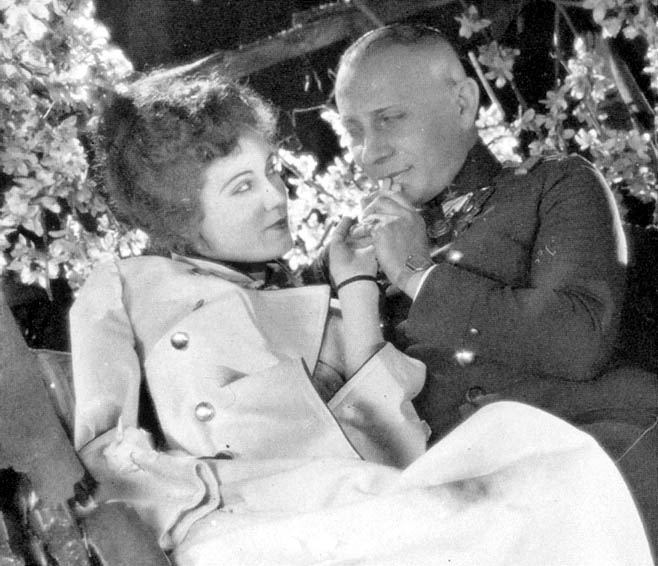
The Last Command stands on the precipice of two auteurs. On the one hand, it is distinctly the vision of director Josef von Sternberg, with his overly romantic sense of narrative expression, which privileges style above all else. At the same time, the film is undeniably under the influence of its star, Emil Jannings... He came to represent a dying breed, the final remnant of classical German respectability that had been disappearing since the country's loss in World War I and the ensuing economic depression... Change was blooming and so was Jannings’ career—his characters, however, were most certainly wilting.

Read my full review of The Last Command here at Not Coming to a Theater Near You.

http://www.notcoming.com/reviews/thelastcommand/

The Dead Don't Die (1975)


"It’s a hybrid of the wrong-man convicted story á la Cornell Woolrich (in which a relative of the incarcerated has to prove them innocent) mixed with Val Lewton and Jacques Tourneur’s I Walked With a Zombie (voodoo lore and cheap sets masked by dark lighting and excessive fog). And as charming as the precision-timed fade-outs are – lingering shots of an actor’s face wearing the expression of shocking, new information, meant to cue intrusive commercials – The Dead Don’t Die is far more than just a piece of retro TV ephemera."

Read my full review of Curtis Harrington's The Dead Don't Die here at Not Coming to a Theater Near You.

http://www.notcoming.com/reviews/thedeaddontdie/

Tuesday, September 23, 2008

Häxan (1922)


"Delineating between documentary (the research-based lecture), fiction (the narrative segments), and meta-commentary (asides referring to events that may or may not have occurred during filming), Benjamin Christensen has created an enquiry into both the historical and contemporary role of “the occult” and “religion” in society. At the same time, he has also crafted an extraordinarily detailed example of the macabre, one that revels in dark corners, shadowy figures, hallucinatory specters, gnarled corpses, and grotesqueries that had rarely been seen before, and even now – eighty six years later – can hold its own against any modern computer generated effects. Häxan’s power to fascinate, disturb, entertain, and enlighten, have only grown over time, the true sign of a masterpiece."

Read my full essay on Häxan here at Not Coming to a Theater Near You.

http://www.notcoming.com/reviews/haxan/

Friday, September 19, 2008

Taking Father Home (2006)


Taking Father Home is a marvel of low-budget filmmaking: a debut feature film shot on a borrowed video camera for less than $5,000, using friends and non-professionals for actors, and all without the permission of the Chinese government. Director Ying Liang trumps every technical and economic limitation through his highly refined visual sensibility, as elegant as it is imaginative. And yet it’s rather limiting to consider the film only in terms of its “limitations”—Ying makes no excuses for its rough-around-the-edges quality, which only adds to its DIY attitude.

Read my full review of Taking Father Home online here at Hammer to Nail.


http://www.hammertonail.com/?p=378#more-378

Friday, September 12, 2008

Robert Flaherty Film Seminar at BAM


"Whereas the nurse of Casa de Lava and the narrator of Cargo represent the gaze of outsiders looking in, Kent MacKenzie’s docu-fiction hybrid The Exiles (1961) represents the insider speaking out. Examining the everyday lives of a Native American community in 1960s Bunker Hill, Los Angeles, the narration of The Exiles is culled from interviews with the film’s subjects. Recently rescued from obscurity by Milestone Films, The Exiles is nothing short of a revelation: a West Coast Shadows (1959), of sorts, in which MacKenzie captures the anxieties of assimilation and the tensions surrounding ethnic identity in a big city melting pot."

Read my full coverage of the Robert Flaherty Film Seminar at BAM online here at The L Magazine.

http://www.thelmagazine.com/lmag_blog/blog/post__09110808.cfm

Thursday, September 11, 2008

David Lean Retrospective at Film Forum


"Celia Johnson appeared in Lean’s next film (and first solo directorial effort) This Happy Breed (1944). Johnson is perfect as Lean’s middle-class muse, wide-eyed with dreams that would eventually be crushed by domestic disappointment. Ronald Neame’s creamy Technicolor photography elevates this story of “common people” to tragic heights: after his return from the first world war, a husband and his wife set down roots in a small town and start a family. Instead of the idealistic happiness of their dreams, the husband and wife become witnesses to their children’s disappointment, disaster, and even death. In This Happy Breed, the home becomes a landscape of human suffering, discontent, and uncertainty, all rendered through Lean’s exquisite direction and restrained performances of the cast."

Read my full essay on David Lean online here at The L Magazine.

http://www.thelmagazine.com/lmag_blog/blog/post__09100809.cfm

Monday, September 08, 2008

We Can't Go Home Again (1973-1976)


"The line between what is and is not real in We Can’t Go Home Again is more than just a blur: it’s downright schizophrenic. And not just to the extent that its narrative mirrors the circumstances in which it was made – Nicholas Ray, weary after decades of Hollywood filmmaking, assumes a teaching position at the State University of New York at Binghamton and instructs his students through a collaborative feature-film endeavor – but to the possibility that what we are witnessing is the manifestation of Ray’s own mental breakdown."

Read my full essay on We Can't Go Home Again online here at Not Coming to a Theater Near You.

http://www.notcoming.com/reviews/wecantgohomeagain/

Sunday, September 07, 2008

The Janitor (1974)


"The Janitor is at once the result of a few days of furious filmmaking, working through the night, and inspired improvisation, and the accumulation of a lifetime of preoccupations, neuroses, and anxieties. Like his previous film, We Can’t Go Home Again, The Janitor continues to push the divide between the new and old “Nicholas Ray”—the revolutionary experimenter and the Hollywood auteur. But whereas We Can’t Go Home Again expressed Ray’s reluctant optimism—his hope for a younger generation—The Janitor is decidedly misanthropic..."

Read my full review of Nicholas Ray's The Janitor at Not Coming to a Theater Near You.

http://notcoming.com/reviews/thejanitor/