Tuesday, April 29, 2008

Katyn (2007) Tribeca Film Festival Preview

The real highlight of Katyn is Krzysztof Penderecki’s magnificent score...which often works its discordant melodies just beneath the surface of the film, subtly affecting the mood and quietly amplifying the overall sense of horror. For all its embracing of dissonance, there is something unexpectedly reticent and shy about Penderecki’s score, which makes it all the more commendable and effective.

Read my full review of Andrzej Wajda's Katyn online here at The L Magazine.

http://thelmagazine.com/lmag_blog/blog/post__04280809.cfm

Monday, April 28, 2008

The Caller (2008) Tribeca Film Festival Preview

'The Caller thinks that by virtue of leaving certain plot elements and character motivations unexplained that it will become “mysterious." Instead, the film becomes a lame exercise in sub-par genre clichés, devoid of any sense of intrigue or suspense in either its story or characters.'

Read my full review of The Caller online here at The L Magazine.

http://thelmagazine.com/lmag_blog/blog/post__04240818.cfm

A President to Remember (2008) Tribeca Film Festival Preview

"A President to Remember seems to be the type of documentary that Primary was providing an antidote for. This new film is comprised largely of Kennedy’s telecast speeches, as well as footage from Drew’s four previous Kennedy films, strung together with narration from Alec Baldwin that negates any of the controversies and contentions about Kennedy’s presidency, reducing him to almost picture-book simplicity."

Read my full review of Robert Drew's A President to Remember online here at The L Magazine.

http://thelmagazine.com/lmag_blog/blog/post__04240817.cfm

My Winnipeg (2007) Tribeca Film Festival Preview

'Maddin’s narration (performed by Darcy Fehr, who previously performed as “Guy Maddin” in Maddin’s Cowards Bend the Knee) carries echoes of David Goodis’ noir lamentations, and while he speaks cynically about his hometown and its citizens, referring to them as “sleepwalkers,” he never forgets how closely linked to them he is (reinforced by the constant reminder to “stay awake” less he forget to get off the train and wake up back home in Winnipeg).'

Read my full review of Guy Maddin's My Winnipeg online here at The L Magazine.

http://www.thelmagazine.com/lmag_blog/blog/post__04240813.cfm

Wednesday, April 23, 2008

Roman de Gare (2007)

On the way to her engagement party, a woman is dumped by her fiancé at a gas station. A mysterious man (who may or may not be either a serial killer or a bestseller’s ghostwriter) offers her a ride back to her parents’ house, and she asks him to pretend to be her fiancé for one night. Roman de Gare is undeniably cunning with a deft mix of mystery and romance (a Lelouch specialty), though the ending is ultimately more clever than satisfying.

Read my full review of Claude Lelouch's Roman de Gare online here at The L Magazine.

http://www.thelmagazine.com/6/11/Film/feature7.cfm?ctype=2

Tuesday, April 22, 2008

Toby Dammit (1968) Tribeca Film Festival Preview

"Toby Dammit appears in a new 35mm print whose restoration was overseen by its cinematographer Giuseppe Rotunno. With its wide palette of vibrant hues that enhance the film’s delirious and seemingly never-ending tracking shots of leering faces and popping flashbulbs, the film has now been restored to its original hallucinatory glory."

Read my full review of Toby Dammit online here at The L Magazine.

http://www.thelmagazine.com/lmag_blog/blog/post__04220801.cfm

Monday, April 21, 2008

Confessionsofa Ex-Doofus-ItchyFooted Mutha (2008) Tribeca Film Festival Preview

"While at first the film’s amateur DV photography and iMovie-ish editing effects seem charmingly crude, there’s an extraordinary and admirable punk rock quality to them, as though van Peebles were giving the middle finger to every existing standard editing procedure. The editing is crucial to the film’s overarching iconoclasm and DIY-extreme aesthetic, and its technical limitations only seem to instigate even more innovations (the inserting of children sledding and a crowded-beach-shot-ala-Weegee into a sex montage is both breathtaking and scene-stealing)."

Read my full review of Melvin van Peebles' Confessionsofa Ex-Doofus-ItchyFooted Mutha here at The L Magazine.

http://www.thelmagazine.com/lmag_blog/blog/post__04210802.cfm

Wednesday, April 16, 2008

Alberto Cavalcanti and Henry Wulschleger's "Captain Fracasse" (1929)

"What’s shocking about the conclusion of Captain Fracasse is its unbridled sobriety: coming after a fanciful series of swordfights in which no one actually dies, the stark reality of a single death is chilling...So much of Captain Fracasse can be written off as a fairy tale, which is why this execution scene is so powerful, because it is a moment when the fantastic façade of the fiction falls away to reveal a gritty reality: that actions have consequences, and while the rich are allowed to live a fairy tale existence, those less privileged do not always retain the authorship of their own destinies..."

Read my full review of Alberto Cavalcanti and Henry Wulschleger's Captain Fracasse online here at Not Coming to a Theater Near You.

http://notcoming.com/reviews/captainfracasse/

Silent Ozu (Eclipse Box Set)

'And in I Was Born, But…, the highlight of the set (and for my money, a masterpiece to surpass Tokyo Story), two young brothers, while trying to gain the respect of the neighborhood gang, struggle to understand why their father isn’t “important” in the grand scheme of things. The profound simplicity of the children’s disobedience (“Just because he spanked me doesn’t make him important”) and parents’ concern (“Will they lead the same sorry lives we have?”) are characteristic of Ozu’s sensibility, a universal blend of quotidian comedy and transcendental tragedy.'

Read my full review of the Silent Ozu Eclipse DVD Box Set online here at The L Magazine.

http://thelmagazine.com/6/10/Film/feature5.cfm?ctype=2

Wednesday, April 09, 2008

Street Kings (2008)

The utter lack of character insight and depth could be interpreted as a weakness, but at the same time Street King’s bulldozer-like approach keeps it moving at a swift pace, something lacking in so many recent films. Its “surface-only” aesthetic also seems completely deliberate on the part of writer James Ellroy, whose career is steeped equally in contemporary cop lore and the urban mythology of post-WWII Hollywood (L.A. Confidential and The Black Dahlia). Essentially, the film feels like a pulpy late-40s noir made on the cheap...

Read my full review Street Kings online here at The L Magazine.

http://thelmagazine.com/6/9/Film/feature4.cfm?ctype=2

Wednesday, March 26, 2008

Water Lilies (Naissance des pieuvres) (2007)

Written and directed by first-time filmmaker Céline Sciamma, Water Lilies feels remarkably assured in its handling of emotion and desire, never resorting to overly emphatic trauma or snarky anti-emotionalism... [The film] lingers on its characters’ hesitations and empathizes with the overbearing sense of risk and self-doubt so symptomatic of adolescence.

Read my full review of Water Lilies online here at The L Magazine.

http://thelmagazine.com/6/8/Film/feature6.cfm?ctype=2

New Directors New Films 2008

Ballast (Lance Hammer, 2007) 96 min. Gorgeously filmed on 35mm using only natural lighting, Ballast recalls Nestor Almendros’ photography for Claire’s Knee and Days of Heaven transplanted to the Mississippi Delta. Its story, of how a mother and son cope with their estranged father’s suicide, is seductively bleak.

More capsule reviews on this year's New Directors New Films series online here at The L Magazine.

http://thelmagazine.com/6/8/Film/feature9.cfm?ctype=2

Boarding Gate (2007)

"Olivier Assayas’ Boarding Gate, a corporate-corruption-neo-noir, could be imagined as Michael Clayton with a sexy, drug smuggling femme fatale in the lead role. But that would be overly emphasizing the corporate context of the story – an aspect that even the protagonist, Sandra, doesn’t fully comprehend at the film’s end – and denying the visceral desolation and emotional malaise that lies at the film’s core."

Read my full review of Olivier Assayas' Boarding Gate online here at Not Coming To a Theater Near You.

http://notcoming.com/reviews/boardinggate/

Wednesday, March 12, 2008

Le Grand Franju

"Georges Franju opens his 1958 short La Première Nuit with an epigraph that could easily preface any of his other films with equal insight and justification: 'It only requires a little imagination for the most ordinary action to become imbued with disquieting meaning, for the décor of everyday life to engender a fantastic world.' The division between reality and fantasy is not so much highlighted as blurred: Franju imbues the fantastic with a quotidian casualness and uncovers the dormant nightmares in our everyday life."

Read my full review of Anthology Film Archives' George Franju retrospective online here at The L Magazine.

http://thelmagazine.com/6/6/Film/feature2.cfm?ctype=2

Thursday, February 28, 2008

"Nostalgia, then Clobber"


New video for an album that won't come out until summer, probably. Maybe sooner, if I get things together. It's all done and everything, just that there are 2 other albums done that I finished first. The song is called "Nostalgia, then Clobber," and the album is "A History of Parrots." Hope you enjoy. www.myspace.com/modernsilentcinema for more info.

Inventing the Underground (On the Legacy of Amos Vogel)

"Amos Vogel is arguably the person most responsible for contemporary New York City film culture. Before Anthology Film Archives, Film Forum, the IFC Center or Two Boots were around to introduce audiences to the latest in independent, foreign, documentary or experimental cinema — before there was even much of an inkling such films existed — there was Vogel’s Cinema 16, a film society that introduced audiences to a whole new way of looking at not only movies but also the world around them."

Read my full article on Amos Vogel online here at The L Magazine.

http://thelmagazine.com/6/5/Film/feature10.cfm?ctype=2

Monday, February 25, 2008

Baby Face Harrington (1935)

"What makes Baby Face Harrington stand out is not its clever satirizing of gangster movies, nor its status as a mid-period film of director Raoul Walsh, nor its cast that reads like a 'Who’s Who' list of underappreciated character actors, but that its very premise is about the elevation of these 'character actors' to star status: the foregrounding of what is normally merely background ephemera."

Read my full review of Baby Face Harrington online here at Not Coming To a Theater Near You.

http://notcoming.com/reviews/babyfaceharrington/

Sunday, February 24, 2008

Marcel Duchamp's "Anemic Cinema"


Here's a new score I/Modern Silent Cinema composed and performed for Marcel Duchamp's 1926 avant-garde classic "Anemic Cinema." More info on the band at www.myspace.com/modernsilentcinema.

Wednesday, February 20, 2008

Modern Silent Cinema - "Gertie on Tour"


For those of you who don't know, I also compose and perform music under the name Modern Silent Cinema (www.myspace.com/modernsilentcinema). I recently began scoring short films and decided to post one of them on YouTube. The film is "Gertie on Tour" (1921) by Windsor McCay. Check it out and hope you enjoy.

Tuesday, February 19, 2008

The Signal (2007)

"The Signal is an apocalyptic amalgamation of several far better films — Renoir’s The Rules of the Game, Romero’s Dawn of the Dead and especially Buñuel’s The Discreet Charm of the Bourgeoisie — each of which already investigates the same major theme of The Signal: the breakdown of our existing social order."

Read my full review of The Signal here at The L Magazine online.

http://thelmagazine.com/6/4/Film/feature7.cfm?ctype=2

Wednesday, January 30, 2008

More on "The Silence Before Bach" (2007)

"Pere Portabella’s The Silence Before Bach is one of the most exciting and unprecedented musical films in recent years and conveys more understanding of music than a dozen Walk the Lines could ever hope to."

Read my full review of The Silence Before Bach here at The L Magazine online.

http://thelmagazine.com/6/3/Film/feature5.cfm?ctype=2

Don't Look Back (1967)

'From its indelible opening scene, in which a neo-statuesque Dylan stands in an alley holding up cue cards with words from “Subterranean Homesick Blues” while the song plays over the soundtrack, Pennebaker’s cinema verite-styled film challenges traditional music documentaries... [The] fractured relationship between “the artist” and society is Pennebaker’s central theme: accessible enough to make the film appeal even to non-Dylan fans, yet crucial enough to make the film resonate loudly forty-one years later.'

Read my full review of Don't Look Back here at The L Magazine online.

http://thelmagazine.com/6/3/Film/feature8.cfm?ctype=2

Friday, January 25, 2008

The Silence Before Bach (Die Stille vor Bach) (2007)

"Perhaps only the person seated at the piano is privy to such an intimate look at the dance of the piano keys, and perhaps even he isn’t allowed as bare and stripped-down an examination as Portabella has filmed. Creating exciting, new contexts for Bach’s work is at the heart of The Silence Before Bach: not so much reinvigorating the music, but placing it in unfamiliar territory so as to emphasize its deep and varied nuances."

Read my entire review of The Silence Before Bach online here at Not Coming Soon To a Theater Near You.

http://notcoming.com/reviews/thesilencebeforebach/

Thursday, January 17, 2008

Midwinter's Night Dream (2004)

"Serbian director Goran Paskaljevic prefaced a screening of Midwinter Night’s Dream by saying that it is “perhaps my only film without humor.” A modest statement, if also accurate considering its dismal subject of post-war, post-Milosevic Serbia, but so much of Paskaljevic’s humor comes from his humanism, something Midwinter Night’s Dream is severely not lacking in."

Read my entire review of Midwinter Night's Dream online here at Not Coming Soon To a Theater Near You.

http://notcoming.com/reviews/midwinternightsdream/

Friday, January 04, 2008

Best of 2007

Note: Originally I had ten movies in numerical order. Then, after realizing I had left Waitress off the list, I decided to make it number eleven and, in not wanting to go back and re-think the order, just alphabetize them.

Theatrical Releases

Billy the Kid (Venditti)
The Diving Bell and the Butterfly (Schnabel)
Flanders (Dumont)
I Don’t Want to Sleep Alone (Tsai)
Offside (Panahi)
Romance of Astrea and Celadon (Rohmer)
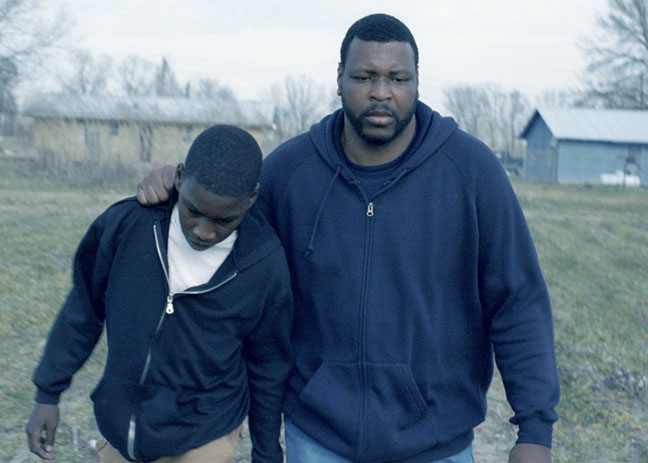
Shotgun Stories (Nicholas)
Summer '04 (Krohmer)
Syndromes and a Century (Weerasethakul)
There Will Be Blood (Anderson)
Waitress (Shelly)


Repertory Picks
1. Killer of Sheep (Burnett, 1977, IFC)
2. The Tender Enemy (Ophüls, 1936, BAM)
3. Let’s Get Lost (Weber, 1988, Film Forum)
4. Reveille With Beverly (Barton, 1943, Film Forum)
5. Bad Santa (Director’s Cut) (Zwigoff, 2003, IFC)

Thursday, January 03, 2008

Looking for Otto Preminger

If there’s anything to be learned from Preminger’s movies, it is that nothing is as it seems: from his early tour de force Laura (1944) to the late masterpiece Bunny Lake is Missing (1965), Preminger’s films are preoccupied with illusory truths and shifting façades. The premises of both these films — a murdered woman in the former and a missing child in the latter— are shattered midway through, challenging everything the audience has learned up to that point.

Read my entire review of Film Forum's Otto Preminger retrospective here at The L Magazine online.

http://thelmagazine.com/6/1/Film/feature1.cfm?ctype=2

Thursday, December 20, 2007

Honeydripper (2007)

"If all you know John Sayles from is the incredible Lone Star (1996), you might not be prepared for Honeydripper, which seems destined for high-school history classrooms."

Read my entire review of Honeydripper online here at The L Magazine.

http://thelmagazine.com/5/29/Film/feature8.cfm?ctype=2

Wednesday, November 21, 2007

The Cinema of Max Ophuls

It’s a source of daily frustration that the films of Max Ophuls are not more widely available, and BAM’s extensive retrospective comes like a long-awaited oasis of rare and incomparable cinema. At the moment, only Lola Montes (1955), Ophuls’ final film and only one in color, is available on DVD. The film is the perfect culmination of a career dedicated to illicit affairs and turbulent passions; tortured women caught between their desires and society’s strict mores; and a swirling, mobile camera that expresses life’s fatalistic merry-go-round unlike anyone else’s before or since.

Read my full review of The Cinema of Max Ophuls here at The L Magazine online.

http://thelmagazine.com/5/27/Film/feature3.cfm?ctype=2

Wednesday, November 07, 2007

Audience of One; Shotgun Stories; The Killer Within

With echoes of Faulkner, Shotgun Stories tells the story of a deep-seated feud between two different families — familes that shared the same father and who were raised to despise one another. After the father dies, both families’ sons become progressively vengeful and violent. Produced by David Gordon Green (George Washington), this is the debut of writer/director Jeff Nichols. He expresses the same poetic sensibility of his producer, yet distinguishes himself with an almost Viscontian sense of epic tragedy.

A father and professor of psychology at a local university, Bob Bechtel’s secret is that in 1955, he committed one of the earliest school shootings in America while at Swarthmore University: He killed one fellow student before turning himself in. Macky Alston’s perceptive direction does its best to break Bechtel’s seemingly impenetrable mask, which makes The Killer Within all the more compelling and unforgettable.


“In 1994, at age 40, Pastor Richard Gozowsky saw his first movie.” This title card provides the genesis for Michael Jacobs’ fascinating, infuriating and uncomfortably funny documentary Audience of One. Within one year, Gozowsky received a message from God — “I want you to be the Rolls Royce of filmmaking” — and began production on Gravity: The Shadow of Joseph, a biblical sci-fi epic described as “Star Wars meets The Ten Commandments.”

Read reviews of Michael Jacobs' Audience of One, Jeff Nichols' Shotgun Stories, and Macky Alston's The Killer Within here at The L Magazine online.

http://thelmagazine.com/5/26/feature/feature2.cfm?ctype=1

War/Dance (2007)

Husband-and-wife co-directors Sean Fine and Andrea Nix Fine artfully interweave politics, personal stories and performance, and all three areas of the film seem in perfect harmony as they inform and inspire one another. The competition story is neither too uplifting nor too detached from the film’s political consciousness: even the most optimistic moments are tinged with a perseverance that reflects a troubled past and an uncertain future.

Read my full review of War/Dance here at The L Magazine online.

http://thelmagazine.com/5/26/Film/feature6.cfm?ctype=2

Wednesday, October 10, 2007

"Terror's Advocate" (2007)

"One can see a predilection for fringe characters throughout Schroeder’s career: More, with 1960s counterculture; General Idi Amin Dada, about the infamous Ugandan dictator; and Barfly, based on the writings of skid row’s poet laureate Charles Bukowski. Schroeder doesn’t necessarily align himself with his subjects, nor does he exploit or malign them. Instead, he is fascinated by the performance and construction of extreme individualism."

Read my full review of Terror's Advocate here at The L Magazine online.

http://www.thelmagazine.com/5/24/Film/feature6.cfm?ctype=2

Tuesday, October 09, 2007

"Finishing the Game" (2007)

"But racial politics seem to have got the better of Lin in Finishing the Game, as he spends so much time mocking cultural stereotypes that his characters rarely get the chance to move beyond them into any nuanced performances. Though reminiscent of Christopher Guest’s films (and the fake Dirk Diggler documentary featured in Boogie Nights), Finishing the Game lacks Guest’s subtle eccentricity, as well as his ability to render idiosyncratic characters with simultaneous strangeness and familiarity."

Read my entire review of Finishing the Game here at The L Magazine online.

http://www.thelmagazine.com/5/23/Film/feature7.cfm?ctype=2

Friday, September 28, 2007

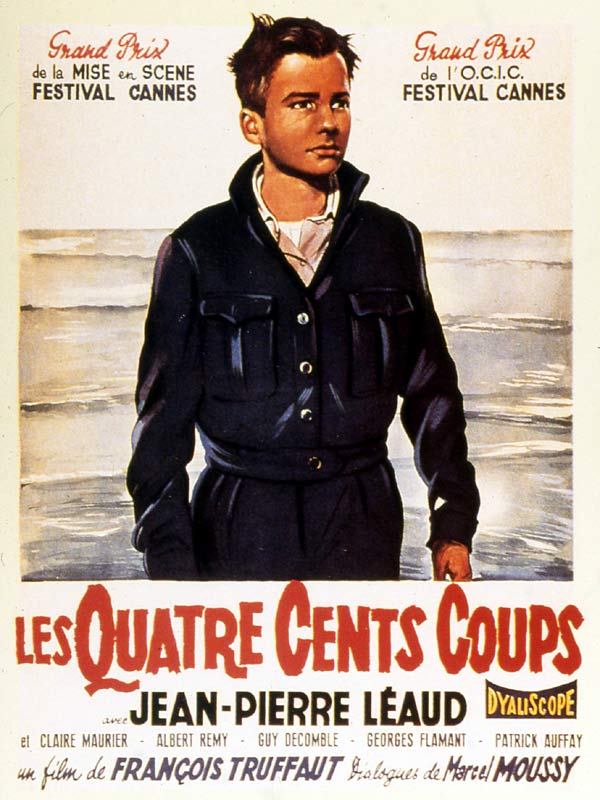
Francois Truffaut's "The 400 Blows" (Les Quatre Cents Coups)

"Forty-eight years later, the film has lost none of its energy and continues to resonate with an ever-enlarging audience. Think of it as that guy/gal down the street that everyone knows and loves."

Read my review of Francois Truffaut's The 400 Blows (Les Quatre Cents Coups) here at The L Magazine online.
http://www.thelmagazine.com/film/film.cfm?listings_id2=83344

Thursday, September 13, 2007

"Film Noir Classic Collection, Vol. 4"

"The real value of this set lies beyond the worth of any individual film (Mystery Street, while fascinating, is uneven and dated) but in the reviving of such obscure curiosities alongside long out-of-print classics such as Nicholas Ray’s debut They Live By Night. Film noir was as much the creation of artists as it was hacks, of youthful innovation (Ray) and experienced craftsmanship (Andre de Toth, director of Crime Wave), and it is befitting that this box-set celebrates the union of such a cinematic myriad."

Read my full review of the "Film Noir Classic Collection, Vol. 4" DVD box-set here at The Brooklyn Rail online.

http://www.brooklynrail.org/2007/9/film/film-noir-classic-collection-vol-4

"The Last Winter" (2006)

"Fessenden imbues the natural-disaster genre with an ambiguity that neither preaches environmental awareness nor contents itself with the spectacle of nature’s special effects-ridden wrath (unlike Twister, Volcano or any of its late-90s brethren). There’s an ethereal evil akin to J-Horror, a mood that spells disaster without actually spelling it out, leaving much interpretation open to the spectator."

Read my full review of Larry Fessenden's The Last Winter here at The L Magazine online.

http://www.thelmagazine.com/5/21/Film/feature8.cfm?ctype=2

"UnAmerican Activities: The Films of Abraham Polonsky"

"The films of Abraham Polonsky are filled with the ambitious and the opportunistic, with double crosses and betrayals, and with capitalist corruption and exploitation. They are the stuff of McCarthy-inspired nightmares, laden with paranoia about the loss of one’s constitutional rights."

Read my full review of "UnAmerican Activities: The Films of Abraham Polonsky" here at The L Magazine online.


http://www.thelmagazine.com/5/21/Film/feature3.cfm?ctype=2

Wednesday, September 05, 2007

"In The Shadow of the Moon" (2007)

"More than mere historical or scientific record, In the Shadow of the Moon is entrancing — and often exhilarating — as it returns the staid nostalgia of Ron Howard’s Apollo 13 to the level of mythology it deserves (Howard, ironically, helped distribute the film). Above all, it is the space footage itself that is so remarkable and captures, with a Lumiere-like simplicity, the majesty of moving images."

Click here to read my entire review of In The Shadow of the Moon at The L Magazine online.

http://www.thelmagazine.com/5/20/Film/feature5.cfm?ctype=2

Tuesday, August 28, 2007

"The King of Kong" (2007)

"This tale of the American Everyman would make even Frank Capra teary-eyed with pride."

Read the entire review here at The L Magazine online.

http://www.thelmagazine.com/film/film.cfm?listings_id2=145234

Wednesday, August 15, 2007

"The Early Films of Samuel Fuller" DVD Box Set

"I Shot Jesse James and The Baron of Arizona are daring, unconventional Westerns: the former offers a sympathetic portrayal of a cold-blooded murderer who shoots his boss in the back for a reward and a woman (Fuller’s reworking of genre conventions precedes such revisionist films as The Wild Bunch and The Good, The Bad, and The Ugly by more than a decade), while the latter focuses on a forger’s attempt to rewrite history in order to inherit the state. The real gem of the set, however, is The Steel Helmet, the first American film to address the Korean War (only six months after it had begun). Unusually brutal for its time, the chaotic and unmannered finale remains potent 56 years later."

Read my review of The Early Films of Samuel Fuller DVD Box Set here at The L Magazine online.

http://www.thelmagazine.com/5/18/Film/feature3.cfm?ctype=2

"Manda Bala" (2007)

"There is an undeniable pulse to Manda Bala (Send a Bullet), a highly kinetic narrative somewhere between the stylized realism of City of God and the eccentric absurdism of Werner Herzog’s documentaries."


Click here to read my review of Manda Bala at The L Magazine online.


http://www.thelmagazine.com/5/18/Film/feature6.cfm?ctype=2

Friday, August 03, 2007

Hong Sang-Soo's "Turning Gate" (2002)

"Hong’s distinctive blend of comedy and drama never sinks to the conventions of either genre, striking an ambiguous and ironic chord somewhere in between the two. Awkward silences speak louder than words in Hong’s films, as though the characters are never quite sure what to say or what they want out of life. When they do speak it is always the wrong thing, and when they decide what they want they are always wrong: self-delusion and uncertainty haunt Hong’s characters like an unwanted epithet."

Click here to read my entire review of Turning Gate at The L Magazine online.

http://www.thelmagazine.com/5/17/Film/film12.cfm?ctype=2

Wednesday, August 01, 2007

"Summer '04" (2006)

"Stefan Krohmer’s Summer ‘04 is a masterful and original thriller that matches Rohmer’s vacationing plots with the paranoid and anxious underpinnings of Polanski, coming together in a noir-tinged story of desire, infidelity, responsibility — and, of course, moral ambiguity."

Click here to read my review of Summer '04 at The L Magazine online.

http://www.thelmagazine.com/5/17/Film/feature5.cfm?ctype=2

Wednesday, July 18, 2007

"The Camden 28" (2007)

"Like many liberal-minded activist documentaries, The Camden 28 has its heart in the right place, but its mind seems to wander. The play-by-play explanation of how they cased the building and planned the robbery is inspiring (if not educational), yet the recreation of the trial nearly 30 years later seems to lack the expected vigor."

Read my review of The Camden 28 (2007) here at The L Magazine online.

http://www.thelmagazine.com/5/16/Film/feature6.cfm?ctype=2

"I Now Pronounce You Chuck and Larry" (2007)

"I Now Pronounce You Chuck and Larry is shamelessly offensive, and it makes no apologies for the endless parade of gay jokes, fat jokes, gay fat jokes, and assorted humor about farts, bondage, boobies, and anything else your 13-year-old nephew has on his mind. Thirty minutes of this movie will bring the chuckling, immature inner bigot out of even the most staunchly mature liberal."

Read my review of I Now Pronounce You Chuck and Larry (2007) here at The L Magazine online.

http://www.thelmagazine.com/5/16/Film/feature7.cfm?ctype=2

Saturday, July 14, 2007

"Drama/Mex" (2006)

"With echoes of the moral ambiguity of Eric Rohmer and the emotional torrents of John Cassavetes, Gerardo Naranjo’s probing second feature, Drama/Mex, is an urgent and melancholic look at emotional entrapment as it affects five people over the course of one day in Acapulco."

Click here to read my review of Drama/Mex (2006) at The L Magazine online.

http://www.thelmagazine.com/5/15/Film/feature4.cfm?ctype=2

Wednesday, July 04, 2007

"Introducing the Dwights" (2007)

For all its cathartic kicking and screaming (and drinking and blubbering), there’s not much of a story here, just a lot of conventional wisdom about growing up and growing older, that we’ve all seen and heard before. At her best, Brenda Blethyn’s performance borders on Mommie Dearest-territory, but every potentially interesting dark undertone is erased by a cringe-inducing happy ending that is all too reminiscent of Little Miss Sunshine.


Read my review of Introducing the Dwights (2007) here at The L Magazine online.


http://www.thelmagazine.com/5/14/Film/feature4.cfm?ctype=2

Saturday, June 30, 2007

"Live Free or Die Hard (2007)

"As worthless as the movie actually is, it’s fascinating culturally as an attempt at making a politically correct post-9/11 action flick. We see car crashes galore, yet we never see any dead civilians... Omitting the casualties, however, doesn’t erase the endless banality of poorly paced action and definitely-not-clever one-liners."

Click here to read my review of Live Free or Die Hard at The L Magazine online.

http://www.thelmagazine.com/5/13/Film/film14.cfm?ctype=2

Thursday, June 21, 2007

"Black Sheep" (2006)

"Equal parts The Birds, Jurassic Park and The Host, Black Sheep is more a satire on the horror genre than it is a cautionary tale about genetic engineering-gone-wrong in the New Zealand countryside. It continually reinvents the most clichéd elements of the horror genre, using easily recognizable and iconic shots from any number of other films…but this time with sheep."

Read my review of "Black Sheep" here at The L Magazine online.

http://www.thelmagazine.com/5/13/Film/feature5.cfm?ctype=2

"Fido" (2006)

"Informed by 1950s Communist-paranoia/ science-fiction classics such as Invasion of the Body Snatchers, director Andrew Currie similarly wants Fido to be seen as a political allegory. But for all the contemporary touchstones (countless references to “fences,” xenophobia, and even a John Kerry look-alike), it rarely moves beyond an experiment in genre cross-pollination."

Read my review of "Fido" here at The L Magazine online.

http://thelmagazine.com/5/12/Film/feature8.cfm?ctype=2